
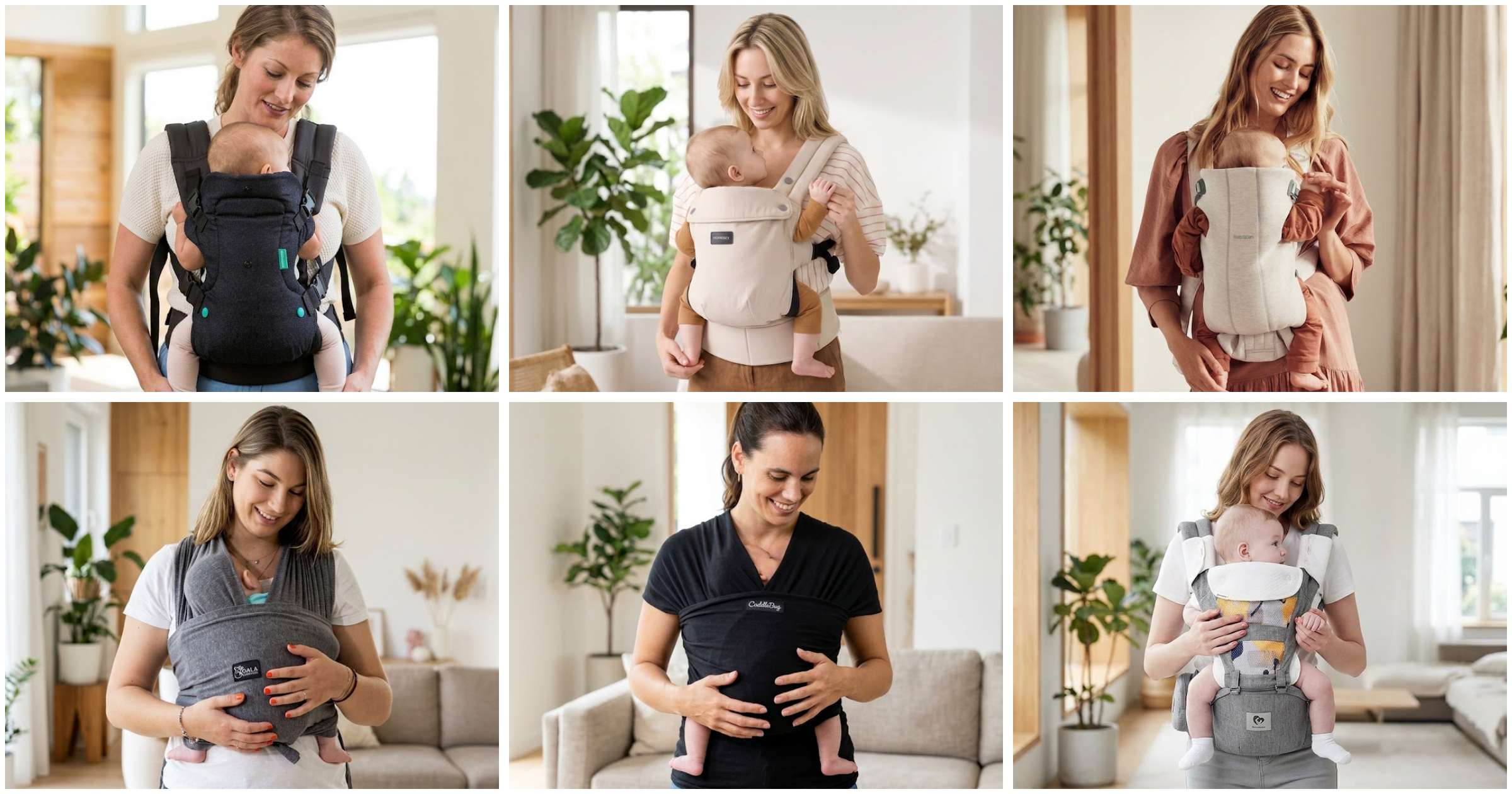
The Uncomfortable Truth About Choosing an Ergonomic Baby Carrier
A 6 kg baby feels weightless at nine in the morning. By three in the afternoon, strapped to your chest, that same baby has somehow doubled in mass and your lower back has opinions.
That is the bit product photos skip. They show a calm parent in soft light, not the slow forward lean that creeps in when a load hangs ahead of your centre of gravity.
A carrier has two bodies to look after, and plenty only manage one. Your baby needs bent, supported knees, a spine that isn’t forced flat and an airway that stays clear. You need the weight moved off your shoulders and onto your hips and trunk.
The word “ergonomic” doesn’t help. On Amazon UK it gets stuck on almost anything with a strap, and it isn’t a regulated claim.
What you can check is harder evidence. Hip-health recognition from the International Hip Dysplasia Institute (IHDI), a weight range that suits your baby today, and fit mechanics you can actually adjust.
We shortlisted six carriers using recent Amazon UK sales, review volume and category ranking, then reviewed each one against the same criteria. How it positions your baby’s hips and spine. How it moves load around your body. How the fabric copes with heat and washing. And where the design runs out of road.
During our testing we paid close attention to places where a product page contradicts itself, because a few of them do. Age ranges and weight limits don’t always agree, and we flag every clash.
A reality check first. No carrier is back-pain-free, whatever a listing promises. The best ergonomic baby carrier reduces strain, it doesn’t erase the physics of carrying a growing child.
Safety comes before comfort, always. Learn the TICKS checks in the buying guide below, and if you can, get a hands-on fitting at a local sling library (your health visitor or midwife can point you to one). Nothing here is medical advice.
One last thing. Pick the format before the brand. These six split into buckle carriers, stretchy wraps and slings, and a hip seat, and they behave very differently on a bad day.
Quick Comparison Table
| Product Name | Product Image | Best For | Key Feature | Core Spec | Buy Now |
|---|---|---|---|---|---|
| Infantino Flip Advanced 4-in-1 Baby Carrier |  | One carrier from newborn to toddler | Four carry positions, front and back | 3.6 to 14.5 kg, 476 g | 🛒Check Price on Amazon |
| Momcozy Baby Carrier | 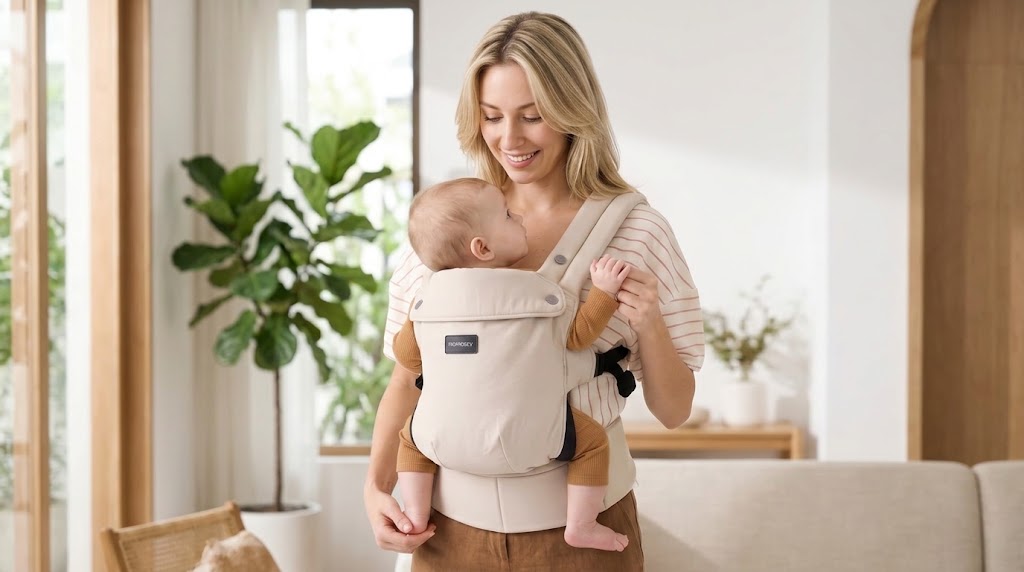 | Waist support and wide size range | X-shaped back straps, EVA waist support | 3.2 to 20 kg, waist 64 to 127 cm | 🛒Check Price on Amazon |
| BabyBjörn Baby Carrier Mini | 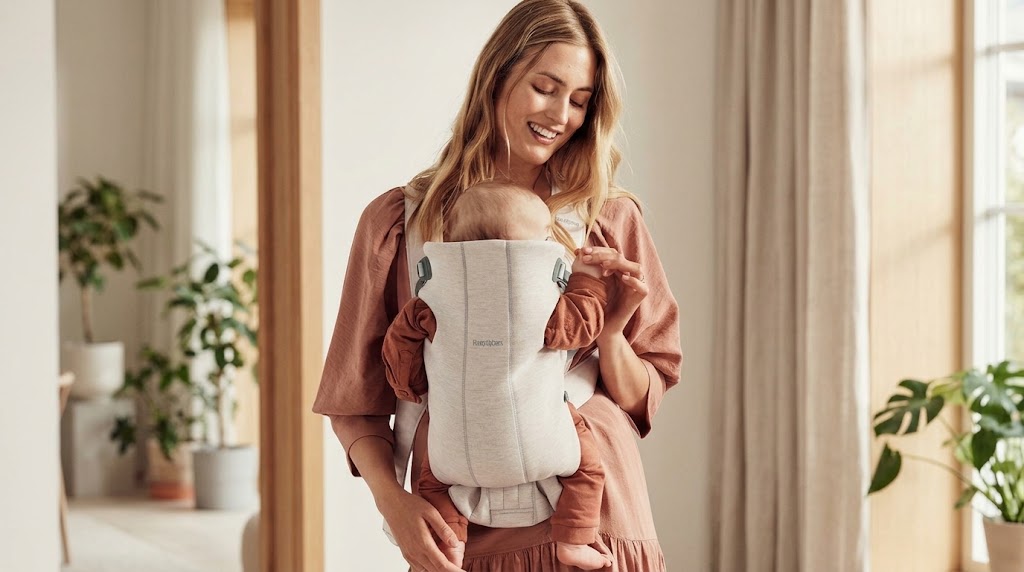 | The first twelve months | Dedicated newborn position, soft 3D jersey | 3.2 to 11 kg, up to 75 cm | 🛒Check Price on Amazon |
| Koala Babycare Baby Sling | 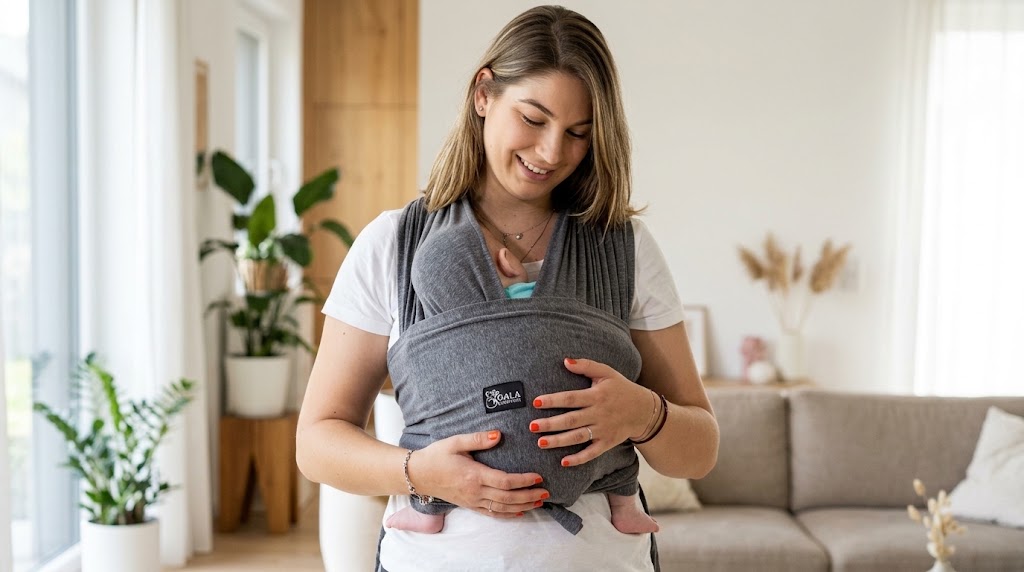 | Small newborns, quick adjustments | Ring closure, one-way stretch fabric | 2 to 9 kg, 840 g | 🛒Check Price on Amazon |
| CuddleBug Baby Sling Carrier | 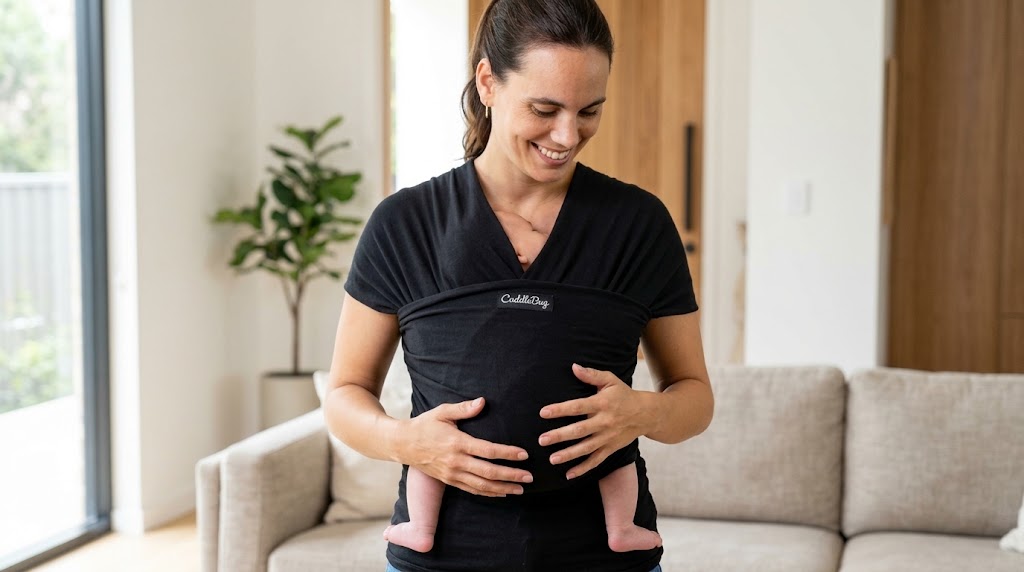 | Cuddly early-months wrap carrying | Tie-on wrap with crossed straps | 3.2 kg up to 35 lb, 590 g | 🛒Check Price on Amazon |
| Bellababy Hip Seat Baby Carrier | 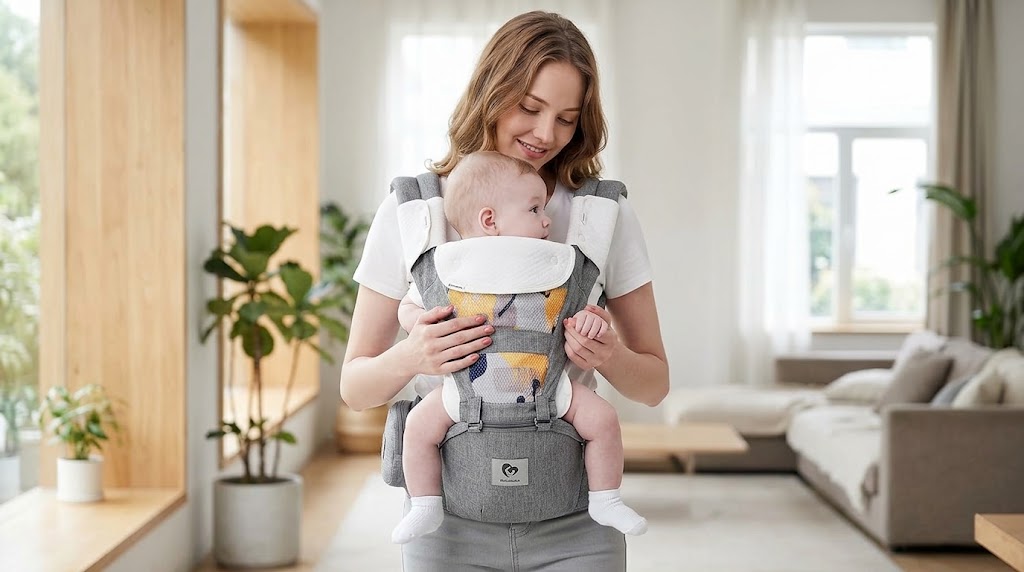 | Older babies and short outings | Hip seat with six carrying ways | 7 to 33 lb, 930 g | 🛒Check Price on Amazon |
Check the current price and availability on Amazon UK before you buy. Both move around.
1. Infantino Flip Advanced 4-in-1 Baby Carrier Review
Infantino Flip is the carrier plenty of UK parents seem to land on, and the numbers back that up. More than a thousand buyers picked it up in the past month, it sat at number one in Baby & Toddler Carriers when we researched it, and the listing carries over 92,000 ratings.
That volume matters because carriers fail slowly. Buckles loosen, stitching frays, straps stretch. A listing with this much sales history has had plenty of time to expose weak points, which makes it a lower-risk starting point than a newer product.
It also wears the Amazon’s Choice badge, though we treat badges as a starting point and not a verdict.
Convertible Carry Positions and Hip Support
The 4-in-1 label means four carry positions: face-in and face-out, on the front and the back. The stated weight range runs from 3.6 kg to 14.5 kg, so on paper one convertible baby carrier covers newborn to toddler.
That range is the clever bit and also the compromise. One seat panel has to suit a 3.6 kg baby and a 14 kg toddler, and the adjustable seat is what makes it possible. When we reviewed the fit mechanics, one point kept coming back: you must reset the seat width as your baby grows so the fabric supports the thighs from knee to knee. Skip that and the legs dangle, which is the opposite of the position you paid for.
Face-out deserves caution. A baby facing away sits further from your chest, which lengthens the lever acting on your shoulders and lower back. Sling advisers generally keep it for babies with solid head control, and for short spells.
Back carry is the other big draw. It moves the load behind you, which feels far better on a long walk with a heavier child, but it is fiddly to manage alone and most advisers suggest waiting until your baby sits unaided.
Fabric, Straps and Everyday Durability
At 476 g this is the lightest carrier on our list. The polyester shell keeps weight down, and the care label says machine wash, which matters the moment reflux or a leaky nappy gets involved.
The manufacturer describes shoulder straps plus a waist belt that moves weight onto your hips. That is the right load path. How well it works depends on cinching the belt snugly at your waist, not loosely across your stomach.
Polyester tends to hold more heat than cotton. In warm weather you’ll notice it, and so will your baby, so dress them lightly.
A washable bib is included according to the product name. Small extra, but a useful one once the drooling starts.
Where This Convertible Carrier Falls Short
The minimum weight is 3.6 kg. Some newborns sit under that for their first days or weeks, so check your baby’s current weight before buying and don’t assume “newborn to toddler” means day one.
There is no waist size range in the product details, which is odd for a carrier that leans on a waist belt. Petite and plus-size parents should check the manual’s belt length before committing.
Head support at newborn size isn’t spelled out in the details we reviewed. Read the instructions closely for how to position a small baby.
And a word on the top of the range. No carrier makes 14 kg feel light, so expect your shoulders to complain on longer outings whatever the straps promise.
2. Momcozy Baby Carrier Review
Momcozy is the more engineered-looking option here. It holds the number two spot in Baby & Toddler Carriers, more than a thousand were bought in the past month, and it carries the Amazon’s Choice badge.
The catch is a smaller sample. Around 1,400 ratings is respectable, but it is a much shorter track record than the Infantino’s, so we’d call our stance interested and not blind.
X-Shaped Straps and Waist Support for Back Comfort
Two details define this design. The back uses an X-shaped strap layout instead of the parallel H-shape found on many carriers, and the waist has a built-in EVA support panel.
Crossed straps tend to stay put on sloping shoulders, and the maker says they spread weight more evenly. Plausible. But we can’t put a number on it from a product page, so treat it as design intent and not a measured result.
The waist panel is the more convincing feature. EVA is a firm foam, and a firm base at your lower back gives the belt something to push against, so load travels to your hips. The stated waist range of 64 to 127 cm is rare sizing detail, and a real help if you are petite or plus size.
For anyone shopping for a baby carrier for back pain, that sizing information counts for more than most marketing copy.
Cotton Build, Padded Leg Openings and Sizing Fit
The shell is cotton and machine washable. It weighs 770 g, noticeably more than the Infantino’s 476 g, and you are paying for the waist panel and padding in grams.
The manufacturer describes three adjustable seat positions that follow your baby’s growth, an M position for the legs and padded leg openings so circulation isn’t squeezed. The listing also states IHDI recognition for healthy hip development, and you can cross-check that on the IHDI website.
Cotton breathes better than polyester. A closed-cell foam waist panel, though, tends to hold warmth, so expect some heat where it meets your back in summer.
Limits of the Momcozy Front-Carry Design
This is a front carry only. For a carrier rated to 20 kg, that is a real limit, because a heavy toddler in front loads you forward exactly when you’d want the weight behind you. Treat 20 kg as a ceiling, not a recommendation.
Age labelling is messy. The title says 3 to 24 months, the specifications say 0 to 36 months, and the weight range starts at 3.2 kg. Ignore the months and go by weight and your baby’s head control.
The manufacturer also doesn’t state how a newborn is positioned at the bottom of the range. Read the manual before you rely on it for a very small baby.
3. BabyBjörn Baby Carrier Mini Review
BabyBjörn is a name many UK parents already know, and the Mini is aimed squarely at the first months. It wears the Amazon’s Choice badge, more than 300 were bought in the past month, and it sits at number six in the carriers chart with over 2,300 ratings.
It is also the most premium carrier here and the one with the shortest working life. Keep that in mind as you read.
Newborn Positioning and Hip-Healthy Seat Geometry
The Mini is a front carrier for babies from 3.2 kg up to 11 kg or 75 cm, which the listing puts at birth to about 12 months. There are three positions: a dedicated newborn position facing in, a standard face-in position, and a face-out position for later.
The adjustable seat and head support are the ergonomic hardware. BabyBjörn says the International Hip Dysplasia Institute acknowledges its carriers as hip-healthy, which is a stronger signal than a vague “ergonomic” tag.
The design logic is simple: a smaller, softer body for a smaller baby. Less fabric means less to fiddle with, and in our review of the fit mechanics that simplicity is the Mini’s best card. The listing says it adjusts to wearers from XS to XL.
Soft Jersey Fabric and Care Trade-Offs
This listing is the 3D jersey version in light beige, made from polyester, cotton and elastane. The range also includes 3D mesh and a woven blend, so check which one you’re clicking.
Jersey is soft and flexible, which suits a tiny baby. Stretch knits do relax with wear though, so recheck the fit a few minutes in, and again once your baby warms up and wriggles.
It weighs 500 g and the care label says machine wash. Lightweight and washable is exactly what you want from something that will meet a lot of milk.
The Short Lifespan Problem With a Newborn-Only Carrier
Here is the catch. The Mini tops out at 11 kg and 75 cm, and the “and/or” wording means a long baby can outgrow it on height before weight. Plenty of parents will want a second carrier before the first birthday.
The product page mentions no padded waist support. The Infantino and Momcozy both describe waist belts that shift weight to your hips, so near the top of the Mini’s range expect more of the load on your shoulders.
One more oddity. The specification field lists front and rear orientation, yet the description only talks about front-carrying positions. We’d treat it as front-only unless the manufacturer’s manual says otherwise.
If you want a soft newborn baby carrier for the early months and nothing more, that is fine. If you want one carrier to do everything, look elsewhere.
4. Koala Babycare Baby Sling Review
Koala Babycare’s sling lives in a different corner of the market. It is a stretchy wrap-style carrier built around a ring closure, with a stated range of 2 kg to 9 kg.
Over 22,000 ratings sit behind it, around 200 more were bought in the past month, and it ranks number five in Carrier Slings on Amazon UK. There is no Amazon’s Choice badge, which tells you little either way.
Ring Closure Adjustability and Newborn Wrap Positioning
The sling uses two adjustable bands and a ring closure, and that is the mechanical heart of the design. Pulling fabric through the rings lets you tighten or loosen without retying, which helps during a feed or when your baby shifts.
It is also shorter than a traditional wrap, so the tail doesn’t trail along the pavement. Practical, if not glamorous.
Orientation is front carry only. With a 2 kg lower limit, the lowest on this list, it suits small newborns. That is also exactly where airway checks matter most, because a tiny baby in soft stretch fabric must sit high and snug with the chin clear of the chest.
Stretch Fabric, Breathability and Hand-Wash Care
The fabric is 65 per cent polyester, 30 per cent cotton and 5 per cent spandex, with stretch in one direction only. One-way stretch tends to hold shape better than a fully elastic wrap, which is a sensible choice for something that has to stay put.
At 840 g it is the second-heaviest carrier here. Unusual for a sling, so don’t expect it to vanish into a coat pocket.
Care is the awkward bit. The label says hand wash only, and a newborn carrier meets spit-up, leaks and milk fast. Plan for that.
Where a Stretchy Baby Sling Runs Out of Road
Nine kilograms is the ceiling, and it is an honest one. Stretch fabric sags under weight, so a baby near that limit will pull the carrier lower and looser than you want. Most families will outgrow it somewhere in the middle of the first year.
The listing leans on the word certified without naming a specific standard in the details we reviewed. If certification matters to you, ask the seller or check the manufacturer’s paperwork.
There is also a learning curve. Rings and bands are simpler than a long woven wrap, but you still need practice before you trust it with a baby. Try it at home over a sofa, with someone watching.
5. CuddleBug Baby Sling Carrier Review
CuddleBug is a stretchy wrap with a big following: close to 16,000 ratings, an Amazon’s Choice badge and more than 100 bought in the past month. It ranks eleventh in Carrier Slings.
It is a single length of fabric. You tie it, and that is both the charm and the challenge.
Tie-On Wrap Fit and Crossed-Strap Weight Distribution
You tie CuddleBug yourself, so the fit is custom every time. Crossed straps spread the load over both shoulders, and keeping your baby close to your centre of gravity is the right principle.
That is also the catch. A wrap is only as good as your tying, and a sloppy knot in the first minute becomes a loose carrier by the tenth. Practise at home, and tie it before you leave the house, not on the pavement.
The listing calls it one size for petite to plus-size wearers. Reasonable for a tie-on design, where fit comes from the knot and not a fixed belt.
Cotton-Spandex Fabric and Washability
The product page describes a soft cotton and spandex blend, while the specification says cotton polyester. The mismatch is a small red flag, and no material percentages are given, so we can’t say how stretchy the fabric really is.
It weighs 590 g, lighter than the Koala, and the care label says machine wash. For a newborn that is a practical win.
Layers matter in heat. A wrap puts several passes of fabric over your baby, so overheating is something to watch in summer.
The Weight Limit Question for a Stretchy Baby Wrap
Here the listing contradicts itself. The title says up to 36 lb, the specification says 35 lb, and a bullet says 3 to 15 kg. Treat all three with suspicion.
Stretchy fabric struggles with heavier babies. Sling advisers generally prefer structured carriers or woven wraps for bigger children and for back carries. The listing claims front, back and hip carries, but in a stretch wrap we’d stick to front carries in the early months.
Marketing needs a pinch of salt too. The page promises a specific percentage drop in crying and calls the wrap back-pain-free. A good carrier can reduce strain. None removes it.
For a newborn, fine. For a heavy toddler, choose something else.
6. Bellababy Hip Seat Baby Carrier Review
Bellababy isn’t a conventional carrier. It is a hip seat: a waist belt with a built-in seat, plus shoulder straps and, according to the listing, six carrying methods.
It ranks eleventh in Baby & Toddler Carriers, with over 3,200 ratings and more than 100 bought in the past month. No Amazon’s Choice badge, so the evidence base is thinner than the big names.
Hip Seat Mechanics and the M Position Claim
A hip seat gives your baby a small shelf at your waist. The shelf carries a big share of the weight, so your hips take more of the load and your shoulders less.
The listing describes a 3D memory seat that holds your baby’s bottom and keeps the legs in an M shape, and says the IHDI acknowledges it as hip-healthy. We’d verify that on the IHDI website before relying on it.
What we looked at closely is seat width. A narrow shelf lets the knees drop below the bottom, the exact position hip specialists want to avoid. When you try it, check that the thighs are supported to the back of the knees.
Waist Belt, Shoulder Straps and Fabric Comfort
The straps are thickened and the waist belt is widened. The listing mentions a lengthened belt of 52 inches, about 132 cm, but gives no minimum waist size, so petite parents should check the manual.
The material is cotton and polyester, with a pure cotton saliva towel included for drool. The page says it suits all seasons, and the care label says machine wash.
At 930 g it is the heaviest carrier on this list. Some of that is the seat. That is the cost of it.
Weak Spots of a Six-Way Hip Seat Carrier
The stated range is 7 to 33 lb, roughly 3.2 to 15 kg, and the age range runs from newborn to toddler. Hip seats generally suit babies with decent head and neck control, and the product page doesn’t say which of the six carrying methods fit which age. Read the manual’s newborn instructions closely.
Bulk is the other issue. A rigid seat at your waist changes how you sit and bend, so expect it to feel clumsier than a soft carrier when you lean into a car boot or perch on a stool.
The orientation field says front only, so there is no back carry for a heavy toddler. A smaller review base than the big names also means less long-term evidence.
Treat it as an option for short trips with an older baby, not an all-day newborn solution.
Comprehensive Buying Guide: The Mechanics of Safe, Comfortable Babywearing
Choosing a carrier from photos alone is a bit like picking a rucksack for a mountain without checking the straps. Here is what actually separates a good one from a tiring one.
The M Position and What a Hip Healthy Baby Carrier Really Means
Healthy hip positioning has a name: the M position, sometimes called spread-squat. Your baby’s thighs are spread and supported from knee to knee, the knees sit higher than the bottom, and the back curves gently. From the side, the legs form the letter M.
The IHDI recognises products whose design supports that position. Three of our six, the Momcozy, BabyBjörn and Bellababy, point to it on their product pages, though the wording ranges from “certified” to “acknowledged”.
Be realistic about what that means. It is a check on carrier geometry, not a medical guarantee for your baby’s hips.
The red flag to avoid is a narrow seat that lets the legs dangle. If your baby has a hip dysplasia diagnosis or is in a harness or brace, ask your clinician before using any carrier.
Weight Range, Age and Why Listing Labels Disagree
Go by weight, not months. Babies grow at different speeds, and months are a rough guess at best.
Among these six, the stated minimum weight runs from 2 kg on the Koala to 3.6 kg on the Infantino. The stated maximum runs from 9 kg on the Koala to 20 kg on the Momcozy. Wide gaps.
Listings also clash with themselves. The Momcozy quotes two different age ranges, and the CuddleBug quotes three different weight limits. When two numbers disagree, follow the lower one and check the manual.
Remember too that a maximum weight is a safety limit, not a comfort rating. A carrier can be safe at its limit and still miserable for your back.
Structured Carrier, Stretchy Wrap or Hip Seat: Matching Format to Stage
Structured buckle carriers, like the Infantino, Momcozy and BabyBjörn Mini, go on quickly and need little practice. The trade-off is bulk and, for some, less snug newborn positioning.
Stretchy wraps and slings, like the CuddleBug and Koala, hug a small baby closely and pack away small. They also sag as babies get heavier, run warm, and demand practice before you trust them.
A hip seat, like the Bellababy, moves load to your hips and suits an older baby on short trips. It is the bulkiest to wear.
Direction matters too. Face-in is the default for young babies, face-out suits those with solid head control for short periods, and back carry is for babies who sit unaided. Try before you buy if you can, because a sling library will let you borrow and compare.
Weight Transfer, Waist Belts and Your Own Back
Your back cares about where the load travels. Shoulders tire quickly. Hips and the strong muscles around them cope much better, which is why waist belts exist.
The Infantino, Momcozy and Bellababy all describe belts that move weight to your hips. The BabyBjörn Mini and the two wraps rely more on shoulders and fabric tension.
Fit rules help whichever you pick. Wear the baby high on your chest, close enough to kiss. Tighten until there is no gap between baby and body, because a loose carrier lets the weight swing and drag you forward.
Check waist sizing too. The Momcozy states 64 to 127 cm, the Bellababy mentions a lengthened belt, and several others give no range at all. Swap sides, take breaks, and if back pain lingers, see your GP or a physiotherapist.
Airway Safety, TICKS and Safety Standards
The TICKS checklist is widely used by UK sling consultants and safety groups:
- Tight: snug enough to hold your baby close, with no slack fabric.
- In view at all times: you should always be able to see your baby’s face.
- Close enough to kiss: baby’s head sits high enough for you to kiss the top.
- Keep chin off chest: a chin pressed to the chest can restrict breathing.
- Supported back: your baby’s back keeps its natural curve.
Never wear a baby in a car, on a bike or while cooking at the hob. Advice from charities like The Lullaby Trust is worth reading before your first outing.
Soft baby carriers fall under the BS EN 13209-2 standard. None of the product pages we reviewed spelled out conformity in the details we saw, so ask the seller or check the product’s paperwork.
Fabric, Heat and Washing Reality
Babies can’t regulate their temperature well, and a carrier adds a layer. Dress your baby in slightly less than you otherwise would, and watch for flushed skin or sweaty hair.
Cotton breathes better than polyester. Mesh or open-knit options cool things further, as the BabyBjörn range hints, though this listing is the jersey version.
Care matters more than you’d think. Five of our six are machine washable. The Koala is hand wash only, and with a newborn that becomes a chore very quickly.
Frequently Asked Questions (FAQ)
Can the right baby carrier for back pain really make a difference?
It can reduce strain, but it won’t cure it. A waist belt that moves weight onto your hips usually helps more than straps alone, and a proper fit matters more than any brand name. If back pain persists, speak to your GP or a physiotherapist.
When can I start using a newborn baby carrier?
Start with the carrier’s stated minimum weight, which ranges from 2 kg on the Koala to 3.6 kg on the Infantino among these six. Some newborns weigh less than that for their first days. If your baby was born early or is small, ask your midwife or health visitor before using any carrier.
Is a stretchy wrap or a buckle carrier better for a newborn?
Neither wins outright. A wrap holds a tiny baby snugly but needs practice, and it sags as your baby gains weight. A buckle carrier is quicker to fit and simpler for a first-timer, though bulkier. If you want the easiest start, a structured option like the BabyBjörn Mini suits the early months.
Are face-out positions good for my baby’s hips?
Hip position depends on knee-to-knee support, not the direction your baby faces. A well-supported face-out position can still be hip-friendly. The drawbacks lie elsewhere: your baby can’t turn away from stimulation, and their weight sits further from your body, which strains your back. Keep it for babies with solid head control and for short spells.
Can I breastfeed in a baby carrier?
The Koala and CuddleBug pages both mention discreet feeding. If you try it, keep your baby’s chin off the chest and the airway clear, and return them to an upright, secure position afterwards. Practise first, ideally with a sling consultant.
Does a hip healthy baby carrier label protect my baby’s hips?
It signals good carrier design, not a medical guarantee. Hip development depends on many things, including how long your baby is carried and in what position. If your baby was breech at birth or there is a family history of hip problems, ask your GP or health visitor about it.
Final Verdict and Direct Recommendation
Six carriers, three formats, one rule: match the format to your baby’s stage and your own body. There is no single winner for every family, but there is a clear all-rounder.
For most readers, the Infantino Flip Advanced 4-in-1 Baby Carrier is the strongest all-round ergonomic baby carrier. It is the lightest here, covers newborn to toddler on paper, offers front and back carries, and has the biggest sales history of the group. Check the minimum weight and seat width before you buy.
If your baby is brand new, the BabyBjörn Baby Carrier Mini is the best-designed newborn baby carrier on the list, with IHDI recognition and a dedicated newborn position. Accept that you will probably need a second carrier within a year.
Want waist support and proper sizing information? The Momcozy Baby Carrier gives you an EVA waist panel and a stated waist range of 64 to 127 cm, though it is front-carry only and heavier.
For a very small baby and fast adjustments, the Koala Babycare Baby Sling has the lowest minimum weight and a ring closure. Plan on hand washing, and on outgrowing it by about 9 kg.
The CuddleBug Baby Sling Carrier suits parents who’ll practise tying a wrap and want close early-months cuddles. Ignore its inconsistent weight limits and keep to front carries in stretchy fabric.
And the Bellababy Hip Seat Baby Carrier is the pick for an older baby and short trips, where moving load to your hips pays off. Read the newborn instructions carefully before using it with a very small baby.
Whatever you choose, learn TICKS, check the fit every time and book a sling library session if you can. That beats any product page.
Look After Your Own Posture Too
Carrying a baby is only one slice of the day. If your back is already tired from broken sleep, check our guide to the best ergonomic pillow UK to give your neck and shoulders a better night.
Spending long hours on your feet with a baby on your front? Our best ergonomic shoes UK review covers footwear for real foot pain and long shifts. And if you’re heading back to a desk soon, the best ergonomic chair for office UK guide will help you avoid undoing the work your carrier started.
Affiliate disclosure: Ergo Setup Lab is reader-supported. As an Amazon Associate we earn from qualifying purchases, so if you buy through our links we may receive a small commission at no extra cost to you. It never changes what we write. Read our full affiliate disclosure. Prices and stock change often, so check the current price on Amazon UK.