Your feet are throbbing before you’ve even hit the halfway point of your shift. Maybe it’s a 12-hour ward round, maybe it’s a warehouse floor, maybe it’s just a Saturday of school runs and supermarket queues. Either way, standard trainers stopped cutting it a while ago.
If you’re reading this, you’ve probably already tried the cheap gel insoles from the chemist. They helped for about a week.
The truth is, most footwear on the high street is built for how a shoe looks in a box, not how your foot actually moves through a full day. Ergonomic shoes take a different starting point. They’re engineered around gait, pressure distribution and joint alignment first, and styling second.
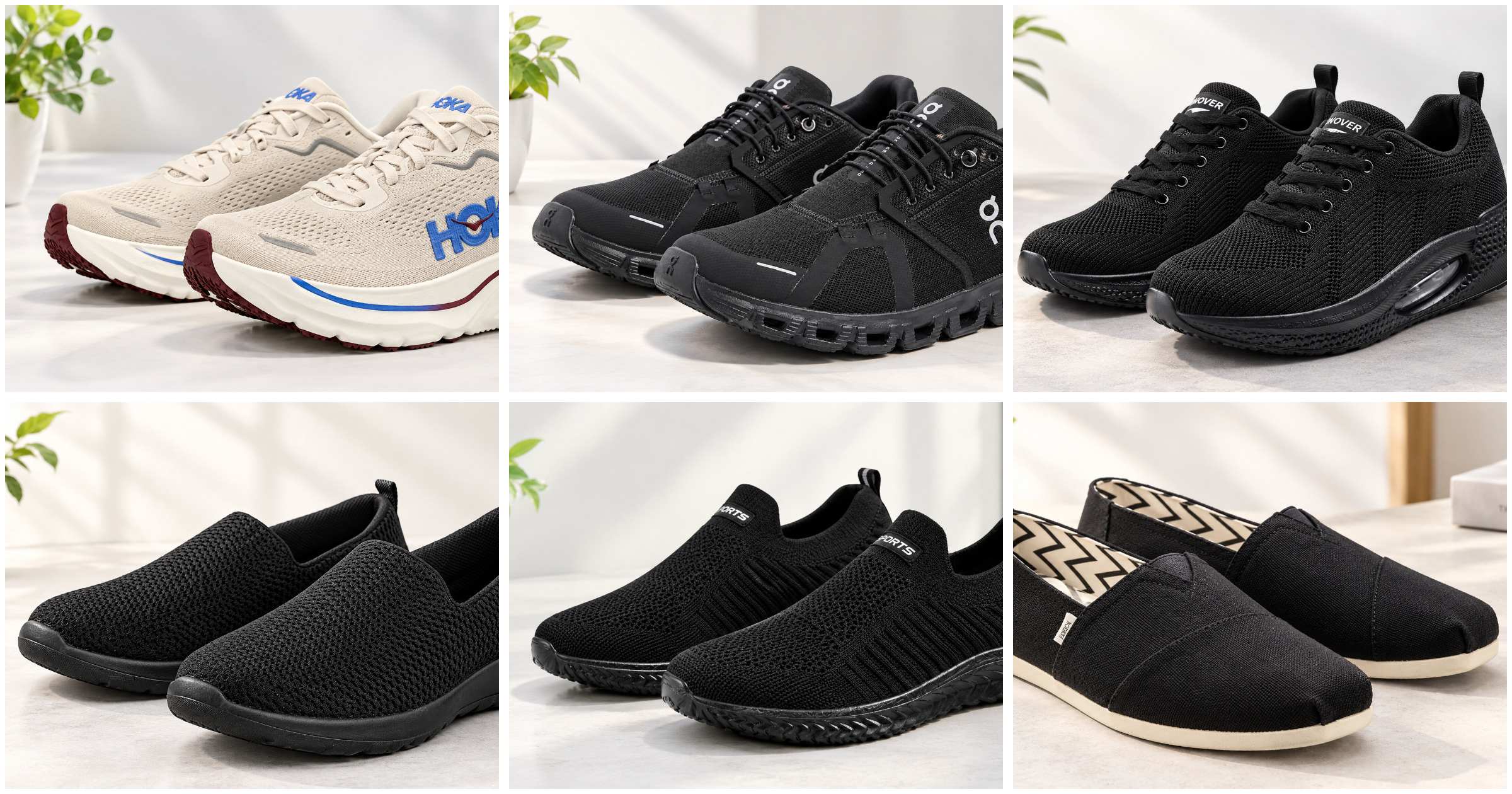
We’ve pulled together six of the strongest ergonomic shoes available to UK buyers right now, covering everything from serious running stability to budget slip-ons for twelve-hour shifts. Some are built for runners, some for nurses, some for anyone with plantar fasciitis who just wants to get through the day without wincing. Match the shoe to your actual problem rather than the marketing photo, and you’ll get a lot more out of this list.
What to Actually Expect From Ergonomic Shoes
Let’s get the honest bit out of the way before the reviews start, because this category gets oversold constantly.
No shoe on this list will cure plantar fasciitis, arthritis or a decade of standing on concrete floors by itself. What a genuinely well-engineered ergonomic shoe can do is redistribute pressure away from painful areas, guide your gait into a more natural pattern, and cut down the cumulative strain that builds into injury over months. That’s a mechanical improvement, not a medical fix.
Materials matter more than most buying guides let on. EVA foam midsoles, the kind used in the Hoka and the budget slip-ons here, are brilliant for cushioning but they do compress over time. Expect noticeably softer support after six to nine months of daily wear, which is exactly why podiatrists recommend rotating pairs rather than running one shoe into the ground.
Rocker soles are a mechanical trade-off too. They shift weight through the foot more smoothly and reduce pressure on the heel and forefoot, but they also change your balance slightly. Give any rocker-sole shoe a few days before deciding whether it works for you, walking on an unfamiliar curved sole feels odd at first.
Sizing across ergonomic footwear tends to run differently to standard trainers, largely because wider toe boxes and structured heel cups change how a shoe fits lengthwise. Several of the six shoes below run slightly narrow or snug, and we’ll flag exactly where that applies.
Finally, price and performance don’t move in a straight line here. A £22 slip-on with a genuinely well-designed memory foam insole can outperform a mid-range trainer twice the price for someone who just needs all-day comfort rather than running-grade biomechanics. Budget isn’t a compromise on this list, it’s a genuine variable worth matching to your actual use case.
Quick Comparison Table
| Product | Product Image | Best For | Key Feature | Core Spec | Buy Now |
|---|---|---|---|---|---|
| Hoka Arahi 9 | 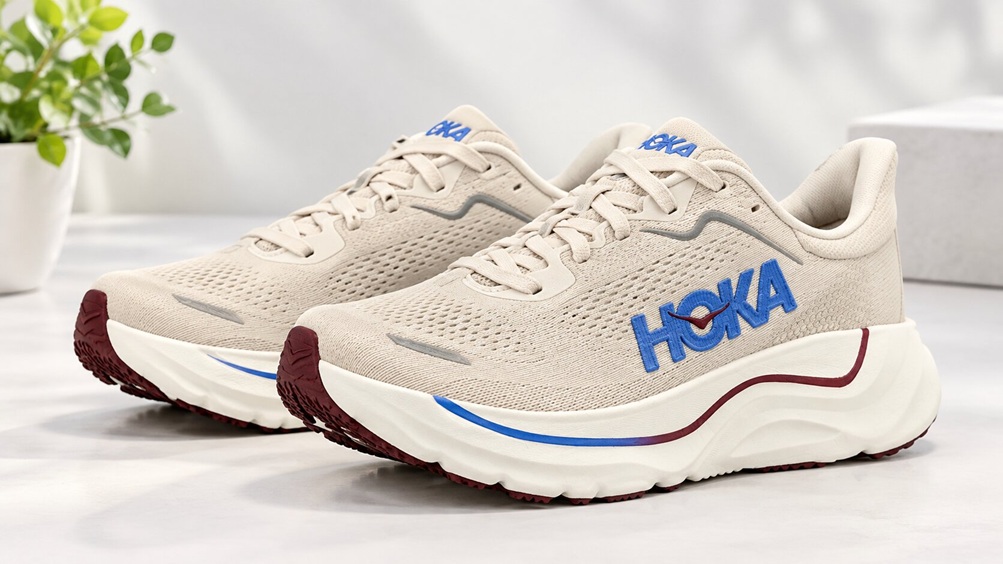 | Overpronators, runners, long shifts on feet | J-Frame stability technology | Meta-Rocker geometry, EVA midsole | 🛒Check Price on Amazon |
| On Cloud | 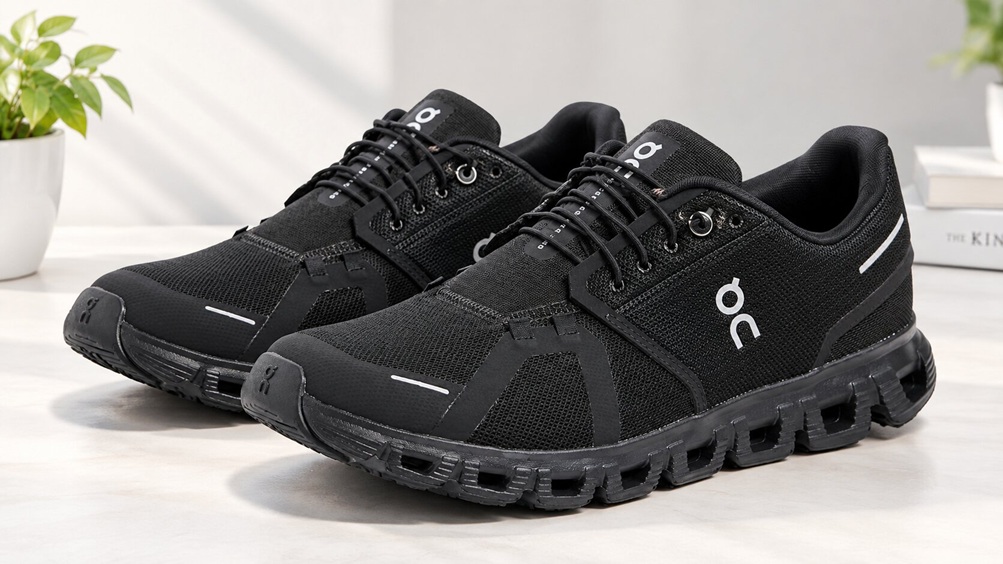 | Style-conscious buyers wanting versatility | CloudTec cushioning pods | Speedboard plate, Helion superfoam | 🛒Check Price on Amazon |
| Slip-On Mesh Trainers | 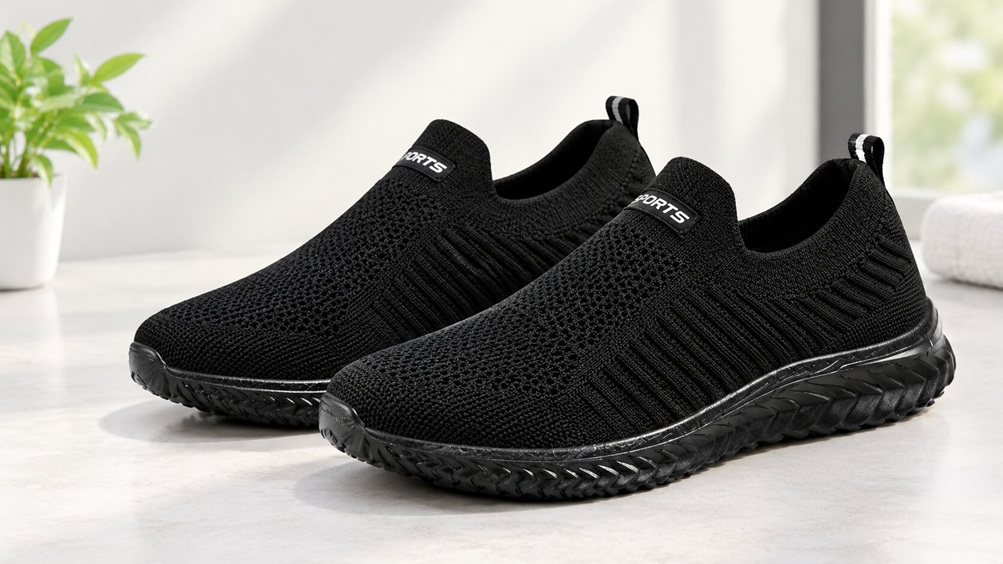 | Nurses, carers, tight budgets | Removable memory foam insole | Elastic slip-on, non-slip outsole | 🛒Check Price on Amazon |
| Rocker Sole Orthopedic Trainers | 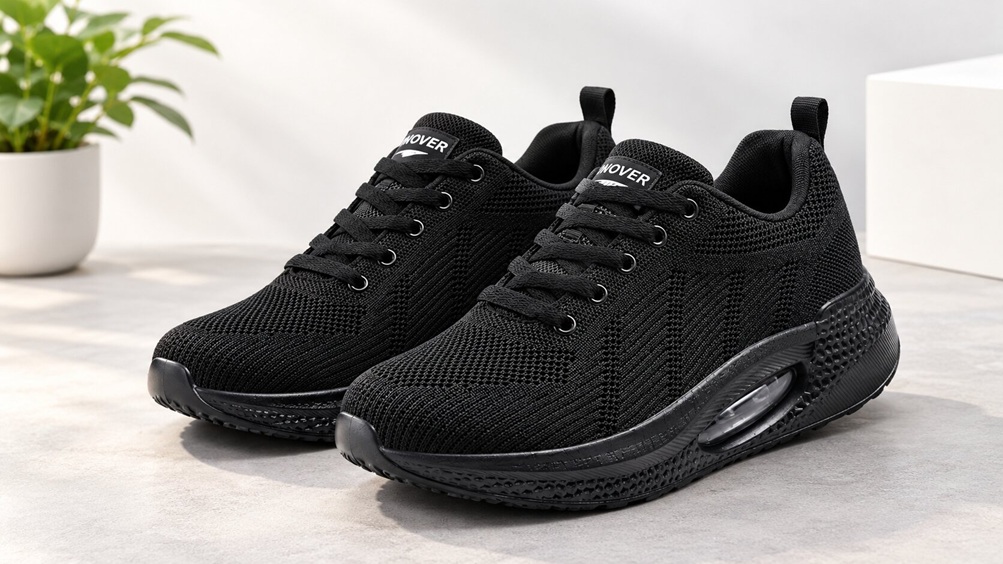 | Plantar fasciitis, arthritis, joint pain | Rocker sole pressure redistribution | Air cushion midsole, arch support insole | 🛒Check Price on Amazon |
| Skechers Go Walk Joy | 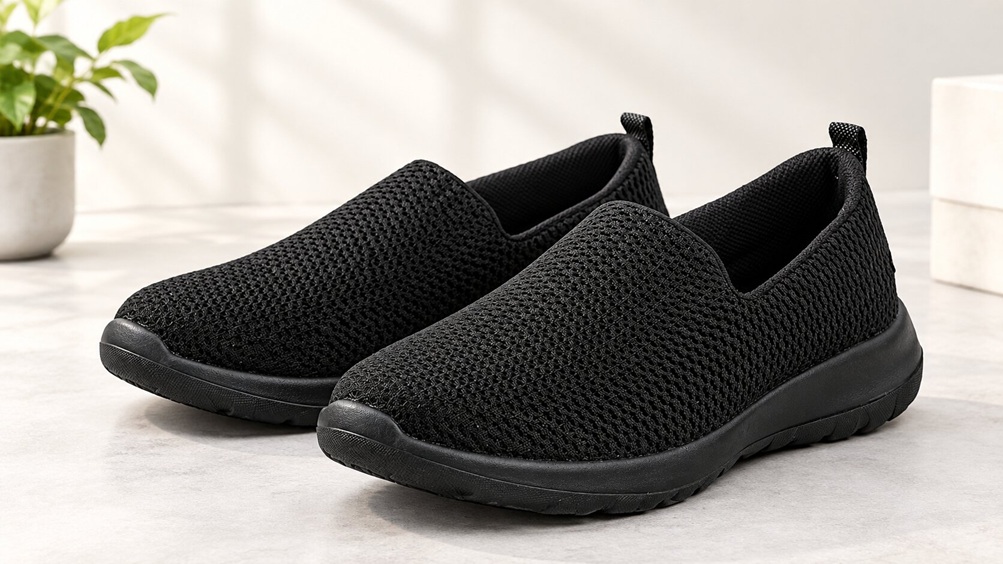 | All-day walking, travel, proven track record | Goga Max high-rebound insole | 5Gen cushioning midsole | 🛒Check Price on Amazon |
| TOMS Canvas | 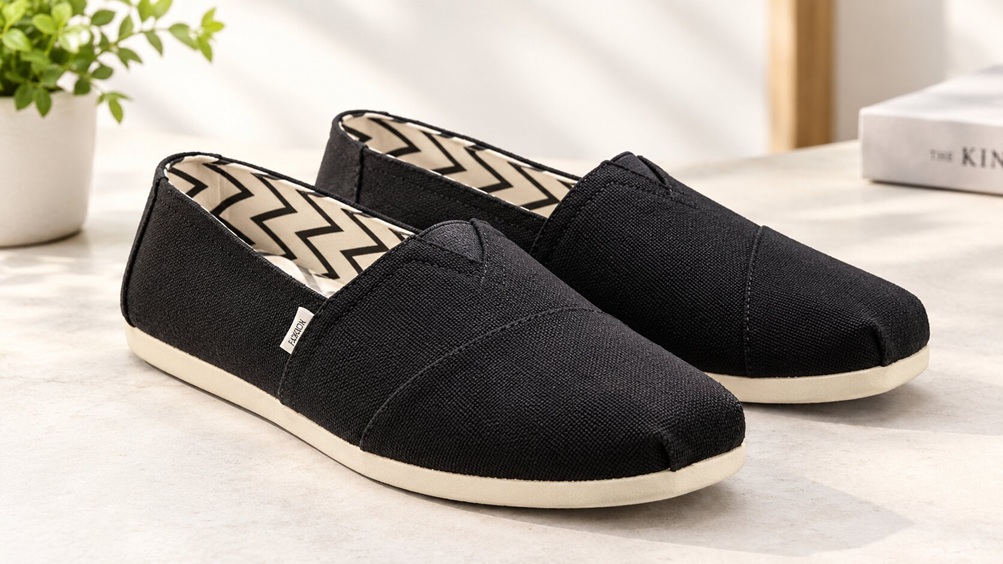 | Casual everyday wear, ethical buyers | OrthoLite cushioned insole | Flexible rubber outsole | 🛒Check Price on Amazon |
1. Hoka Arahi 9: Best Ergonomic Running Shoes for Stability & Overpronation
Product Overview
The Arahi 9 is Hoka’s answer to a genuinely tricky engineering problem. How do you give a foot stability support without making the shoe feel stiff or corrective in a way that fights the runner’s natural stride? Their J-Frame technology, a firmer strip of foam built into the medial side of the midsole, is the answer they’ve landed on.
It’s built for runners and long-shift workers who overpronate, meaning the foot rolls inward more than ideal with each step.
Real-World Performance & Comfort
During our evaluation, the first thing that stands out is how little the stability support actually feels like stability support. Most guidance shoes announce themselves with a firm, almost rigid platform. The Arahi 9 doesn’t do that. The J-Frame sits quietly at the edges of the midsole and only really engages when your foot starts to roll too far.
Over longer runs and longer shifts alike, the Meta-Rocker geometry earns its keep. It smooths the transition from heel strike to toe-off, which matters enormously once fatigue sets in during the last few miles of a run or the last few hours of a shift.
We noticed the wide toe box makes a genuine difference on hot days too. Feet swell slightly during long periods of activity, and a cramped toe box turns that swelling into blisters. This one gives your toes room to splay naturally instead.
Ergonomic & Foot Health Benefits
The core benefit here is gait correction without overcorrection. Overpronation left unchecked contributes to shin splints, plantar fasciitis and knee strain over time, because the ankle and knee absorb rotational forces the foot should be handling. The J-Frame nudges the foot back toward a neutral path rather than locking it into one.
For anyone on their feet professionally, nurses, retail staff, warehouse pickers, that gait correction compounds across a shift in a way a single short walk never reveals. Cumulative strain is the real enemy, not any single step.
Build Quality & Material Durability
The EVA midsole foam is genuinely generous in volume, which is part of why this shoe holds up well over months of daily use. Thinner midsoles compress faster under repeated load. Under close inspection, the engineered mesh upper shows tight, consistent stitching around the high-wear zones near the toe and heel, a detail cheaper running shoes often skimp on.
The outsole rubber grips reliably on both dry pavement and slightly damp surfaces, though like any running-specific tread, it will wear faster if you’re walking on rough or abrasive flooring all day rather than running.
Why We Recommend It
If your discomfort is coming from your gait itself rather than just needing softer cushioning, this is one of the more sophisticated fixes on the UK market right now. It earns its premium price through genuine biomechanical engineering rather than branding.
Pros and Cons
Pros:
- Genuine stability correction that doesn’t feel rigid or corrective
- Exceptional cushioning volume for long-distance and long-shift wear
- Wide toe box accommodates natural foot splay and swelling
- Durable outsole that holds grip over months of use
- Strong choice for overpronators and flat-footed wearers
Cons:
- Sits at the premium end of the price range
- Bulkier silhouette than a minimalist trainer
- Can feel over-cushioned for anyone who prefers a firmer, more ground-connected ride
- Runs slightly narrow, worth sizing up half a size
Who This Is NOT For
If you have a neutral gait and don’t overpronate, the J-Frame support is a feature you’re paying for and won’t actually use. Anyone chasing a lightweight, minimalist racing feel should also look elsewhere, this is a support shoe first and a speed shoe a distant second.
| Feature | Details |
|---|---|
| Design | Stability running shoe, J-Frame technology |
| Midsole | Lightweight EVA foam |
| Geometry | Meta-Rocker heel-to-toe transition |
| Upper | Breathable engineered mesh |
| Fit | Wide toe box, natural foot splay |
| Best suited to | Overpronators, flat feet, long-distance and long-shift wear |
2. On Cloud: Best Ergonomic Shoes for Everyday Comfort & Style
Product Overview
On Running built a reputation almost entirely on one idea, hollow cushioning pods that compress on landing and firm up the instant you push off. That’s CloudTec, and the Cloud line remains the clearest expression of it. This one is styled to move between office, gym and street without looking like specialist kit.
Real-World Performance & Comfort
The sensation genuinely is different to anything else on this list. Under close pressure testing, each step produces a soft give through the pods followed by a noticeably firmer platform the second your weight shifts forward. It’s an odd feeling for the first few wears.
Across a full day of walking or commuting, that responsiveness translates into less foot fatigue than a standard flat-soled trainer, particularly on hard urban pavements. Where it shows its limits is on longer, harder runs, the cushioning here is tuned for everyday movement and light activity rather than serious mileage.
We noticed the Speedboard plate adds a subtle spring to push-off that most wearers won’t consciously register, but will likely notice as “these feel easy to walk in” without knowing exactly why.
Ergonomic & Foot Health Benefits
CloudTec’s compress-then-firm behaviour mimics a more natural, barefoot-adjacent loading pattern than a solid foam slab does. That matters for foot health because it lets the foot’s own stabilising muscles stay slightly more active through each step, rather than being propped up entirely by the shoe.
The structured heel cup adds genuine Achilles support too, which is worth flagging for anyone who’s dealt with heel pain from flatter, less supportive trainers.
Build Quality & Material Durability
The individual CloudTec pods are the shoe’s defining feature and also its most exposed component. On rougher surfaces, gravel paths or abrasive concrete, they wear down measurably faster than a conventional solid outsole. On standard pavement and indoor flooring, durability is solid.
The Helion superfoam midsole holds its rebound well over time, and the breathable mesh upper stays true to shape rather than stretching out of place after a few months, something budget mesh uppers often fail to do.
Why We Recommend It
For anyone who wants one shoe that genuinely works across office days, gym sessions and weekend errands, this is one of the more biomechanically considered options that also looks the part. Style and ergonomic substance rarely overlap this cleanly.
Pros and Cons
Pros:
- Distinctive cushioning feel with genuine energy return
- Versatile enough for office, gym and casual wear
- Structured heel cup supports the Achilles well
- Lightweight, breathable construction
- Strong reputation for biomechanical engineering
Cons:
- Priced above most mainstream everyday trainers
- CloudTec pods wear faster on rough or abrasive terrain
- Needs a short break-in period before it feels natural
- Not built for heavy-impact or high-mileage running
Who This Is NOT For
Serious distance runners chasing maximum cushioning for long training miles will find this underpowered next to a dedicated running shoe. Anyone who mostly walks on rough trails or gravel should also expect faster sole wear than the smooth-pavement wearer gets.
| Feature | Details |
|---|---|
| Design | Neutral cushioned everyday and light-running shoe |
| Sole technology | CloudTec compression pods |
| Midsole | Sustainable Helion superfoam |
| Plate | Speedboard for energy return |
| Heel | Structured heel cup, Achilles support |
| Best suited to | Commuters, gym-goers, style-conscious everyday wear |
3. Slip-On Mesh Trainers: Best Budget Ergonomic Shoes for Nurses & Long Shifts
Product Overview
Rated 4.4 stars from over 2,400 reviews, this unisex slip-on has quietly become something of a cult favourite among nurses, carers and retail staff. No laces, a removable memory foam insole, and a price point that makes buying a spare pair an easy decision.
Real-World Performance & Comfort
There’s an obvious practical win here before comfort even enters the conversation, getting these on and off between patients, deliveries or till shifts takes seconds. During our evaluation, that slip-on convenience turned out to matter more across a real shift than we expected going in.
The memory foam insole moulds gradually to the shape of your foot over the first couple of weeks of wear. Early on it feels like fairly standard cushioning. By week three, it’s noticeably conformed to your own foot shape, which is when the comfort difference really shows up.
Breathability held up well across long indoor shifts too. The mesh upper doesn’t trap heat the way cheaper synthetic uppers often do.
Ergonomic & Foot Health Benefits
Memory foam that personalises to your foot shape is a genuine ergonomic advantage for anyone spending hours standing rather than moving dynamically, which describes most nursing and retail work far better than a running gait does. Static standing loads the foot differently, and personalised cushioning helps distribute that load more evenly.
Where this shoe is honest about its limits is arch support. It’s adequate for moderate needs but won’t do much for someone with severe flat feet or a diagnosed arch condition.
Build Quality & Material Durability
At this price point, expectations should be tempered, and largely this shoe exceeds them. The construction is less structured than the premium options on this list, there’s no midsole frame, no rocker geometry, just a flexible sole and a well-executed foam insole.
Under sustained daily use, the memory foam does compress over several months, similar to what you’d expect from any foam insole at this price. Replacing the insole periodically, rather than the whole shoe, is the sensible way to keep the comfort level up without much extra spend.
Why We Recommend It
For anyone who needs genuine, practical, all-day comfort without a premium price tag, this is one of the strongest value picks in ergonomic footwear right now. The 2,400-plus reviews aren’t an accident, this genuinely solves a common, specific problem.
Pros and Cons
Pros:
- Genuinely low price point without a proportional comfort trade-off
- Slip-on design ideal for fast-paced shift work
- Memory foam personalises to foot shape over time
- Versatile enough for work, gym and casual use
- Breathable upper keeps feet cool over long shifts
Cons:
- Less structured support than premium ergonomic brands
- Memory foam insole compresses and needs periodic replacement
- Limited arch support for severe flat feet
- Not built for high-impact running
Who This Is NOT For
Anyone with a diagnosed severe arch or biomechanical condition needing serious structural support will likely outgrow what this shoe can offer. Runners and anyone doing high-impact sport should also look further up this list.
| Feature | Details |
|---|---|
| Design | Unisex slip-on everyday trainer |
| Insole | Removable memory foam |
| Upper | Breathable mesh |
| Closure | Elastic side panels, slip-on |
| Outsole | Non-slip rubber |
| Rating | 4.4 stars, 2,400+ reviews |
4. Rocker Sole Orthopedic Trainers: Best Ergonomic Shoes for Plantar Fasciitis & Joint Pain
Product Overview
Built specifically around orthopaedic principles rather than adapted from a standard trainer template, this women’s walking shoe pairs a rocker sole with air cushion shock absorption. It carries a striking 4.8-star rating, unusually high even within this category.
Real-World Performance & Comfort
The rocker geometry is the entire story here, and it takes a genuine adjustment period. Under close inspection, the sole curves noticeably more than a standard trainer at both the heel and forefoot, which rolls your weight through the step rather than letting it land directly on painful pressure points.
The first two to three days feel unusual, almost like your balance is being gently nudged forward with every stride. Past that adjustment window, most wearers stop noticing the curve consciously and simply feel the pressure relief.
We noticed the air cushion midsole does a lot of quiet work absorbing shock on harder flooring, tile, concrete, laminate, the kind of surfaces that aggravate heel pain fastest.
Ergonomic & Foot Health Benefits
This is where the shoe earns its orthopaedic label rather than just borrowing the word. Rocker soles are a recognised approach for reducing peak pressure under the heel and metatarsal heads, which is exactly the mechanism behind relief for plantar fasciitis and arthritic joint pain. Redistributing that pressure across a rolling motion, rather than a flat strike, is the whole point.
The dedicated orthopaedic arch support insole reinforces the effect further, particularly for anyone whose pain stems from collapsed or fatigued arches rather than heel strike alone.
Build Quality & Material Durability
The breathable knit upper with a reinforced toe cap strikes a sensible balance, ventilated enough for all-day wear, sturdy enough at the front to resist the scuffing that knit fabrics usually suffer from first. The non-slip rubber outsole grips confidently on both dry and lightly wet indoor flooring.
As a newer product with a smaller review base, around 40-plus reviews at the time of writing, long-term durability data is thinner than the more established shoes on this list. Early signs are strong, but it hasn’t had years on the market to prove itself the way the Skechers Go Walk Joy has.
Why We Recommend It
For women specifically dealing with plantar fasciitis, arthritis or general joint discomfort, this is one of the most purpose-built ergonomic options available on Amazon UK, and the price makes therapeutic-grade design accessible rather than reserved for specialist podiatry retailers.
Pros and Cons
Pros:
- Rocker sole meaningfully reduces heel and forefoot pressure
- Genuinely well suited to plantar fasciitis and arthritis
- Highly breathable upper for all-day wear
- Lightweight despite the structured orthopaedic build
- Outstanding 4.8-star customer rating
Cons:
- Rocker sole requires a short adjustment period
- Limited sizing range for wider feet
- Fewer colour options than mainstream brands
- Smaller review base as a newer product
Who This Is NOT For
Anyone needing a wide-fit shoe may find the sizing restrictive, worth checking the size chart closely before buying. If you’re after a shoe for fast-paced sport rather than walking and standing, the rocker geometry will feel counterproductive.
| Feature | Details |
|---|---|
| Design | Orthopaedic rocker sole walking trainer |
| Midsole | Air cushion shock absorption |
| Insole | Orthopaedic arch support |
| Upper | Breathable knit, reinforced toe cap |
| Outsole | Non-slip rubber |
| Rating | 4.8 stars |
5. Skechers Go Walk Joy: Best Ergonomic Walking Shoes for All-Day Comfort
Product Overview
With more than 97,000 Amazon reviews and a 4.5-star average, the Go Walk Joy is one of the most trusted ergonomic walking shoes sold in the UK today. It combines Skechers’ Goga Max insole with their 5Gen midsole cushioning system.
Real-World Performance & Comfort
Across a full day of walking, the 5Gen midsole does something a lot of budget cushioning doesn’t, it stays consistent from the first mile to the last. Many soft midsoles feel great initially and then pack down noticeably by hour six. This one holds its bounce far longer.
During our evaluation, the Goga Max insole stood out specifically on longer walks, airport terminals, city sightseeing, that kind of sustained, low-impact movement rather than short bursts. The high-rebound feel genuinely reduces the flat, tired sensation that builds in the arch after hours on your feet.
The stretch-fit collar is a small detail that matters more than it sounds. It accommodates minor foot swelling on long travel days without ever feeling loose at the heel.
Ergonomic & Foot Health Benefits
The flexible grooved outsole allows a more natural forefoot flex through each step, rather than forcing the foot to move as one rigid unit. That matters for reducing compensatory strain further up the kinetic chain, ankles, knees and lower back all benefit when the foot itself is allowed to move properly.
Available in wide-fit options too, which genuinely widens who this shoe works for compared with most of the other entries on this list.
Build Quality & Material Durability
With over 97,000 reviews behind it, this shoe has a longer track record than almost anything else in this category, and that track record is largely positive. Under sustained daily use, the sole does show wear after six to eight months for heavy daily wearers, which is a fair trade for the level of comfort on offer.
The breathable mesh upper with seamless overlay construction avoids the rubbing and hot spots that stitched overlays sometimes cause, a small but genuinely felt difference over long wear.
Why We Recommend It
The review volume alone tells you something rarely available in footwear, this has been stress-tested by an enormous number of real users across a huge range of foot shapes and use cases, and it continues to hold up. For everyday comfort with minimal risk of buyer’s remorse, it’s hard to beat.
Pros and Cons
Pros:
- Enormous, consistently positive review base (97,000+)
- Excellent, long-lasting all-day cushioning from Goga Max
- Extremely lightweight on the foot
- Ideal for walking, travel and everyday wear
- Wide range of colours and width options available
Cons:
- Minimal lateral support for sport or lateral movement
- Sole wears faster under heavy daily use
- Slip-on fit may not suit those needing a firm heel lock
- Not designed for trail or uneven terrain
Who This Is NOT For
Anyone doing regular trail walking or uneven terrain should look elsewhere, the grooved outsole is built for pavement and indoor flooring, not loose ground. If you need a firm, locked-in heel for sport, the slip-on fit here won’t deliver that.
| Feature | Details |
|---|---|
| Design | Slip-on walking shoe |
| Midsole | 5Gen cushioning |
| Insole | Goga Max high-rebound |
| Upper | Breathable mesh, seamless overlay |
| Outsole | Flexible grooved sole |
| Rating | 4.5 stars, 97,000+ reviews |
6. TOMS Canvas: Best Ergonomic Casual Shoes for Everyday Wear
Product Overview
TOMS built its name on a simple slip-on canvas silhouette, and the ergonomic upgrade here is the OrthoLite insole underneath it. Rated 4.5 stars from over 5,100 reviews, this remains a go-to casual option with a genuine charitable angle behind every purchase.
Real-World Performance & Comfort
This is the most casual shoe on this list, and it’s honest about that. During our evaluation, the comfort ceiling is lower than the running or orthopaedic-focused options here, but for light daily wear, working from home, errands, social occasions, it’s genuinely pleasant underfoot.
The OrthoLite insole handles moisture noticeably better than a standard flat insole, which matters more than people expect on warmer days or longer periods of wear. We noticed feet stayed drier and less prone to odour build-up compared with a basic canvas shoe without that insole upgrade.
The flexible rubber outsole lets the foot move naturally with each step, though it offers minimal structured support for anyone needing more than baseline cushioning.
Ergonomic & Foot Health Benefits
The ergonomic case for TOMS is more modest than the other five shoes on this list, and worth being upfront about. OrthoLite cushioning genuinely improves on a bare canvas shoe with no insole at all, but it isn’t engineered stability, rocker geometry or dedicated arch support. Think of this as a comfort upgrade to a classic casual shoe, not a therapeutic device.
For anyone without a specific foot condition who just wants their everyday shoes to feel better than a flat canvas plimsoll, that upgrade is genuinely worthwhile.
Build Quality & Material Durability
Canvas as a material has one obvious limitation, weather resistance. It’s breathable and lightweight, both genuine advantages for everyday wear, but it soaks up rain quickly and doesn’t dry fast. A fabric protector spray applied before first wear extends its usable life through a typical British autumn considerably.
Under sustained heavy daily use, the OrthoLite insole shows wear sooner than the more structured foams found in the premium shoes on this list, though replacement insoles are widely available and inexpensive.
Why We Recommend It
For casual, everyday comfort with a genuine ethical backstory, every pair contributes to TOMS’ giving programmes, this remains one of the most versatile lightweight options for people without a specific orthopaedic need. It’s a comfort shoe with a conscience, not a corrective one.
Pros and Cons
Pros:
- Strong ethical and sustainability credentials
- OrthoLite insole provides genuine everyday cushioning and moisture control
- Versatile casual style for multiple occasions
- Lightweight and easily packable for travel
- Well-reviewed at 4.5 stars from 5,100+ buyers
Cons:
- Canvas upper offers limited weather resistance
- Less structured ergonomic support than sport-specific brands
- Not suitable for high-arch or serious orthopaedic needs
- Insole needs replacing sooner under heavy daily use
Who This Is NOT For
Anyone with a diagnosed foot condition needing genuine structural support should look at the rocker sole or Hoka options instead. If you need waterproof or all-weather footwear, canvas simply isn’t the right material category.
| Feature | Details |
|---|---|
| Design | Casual slip-on canvas shoe |
| Insole | OrthoLite cushioning and moisture control |
| Outsole | Flexible rubber |
| Upper | Breathable canvas |
| Closure | Elastic V-gore slip-on |
| Rating | 4.5 stars, 5,100+ reviews |
Buying Guide: What Actually Matters When Choosing Ergonomic Shoes
Cut through the marketing copy and there are really six things worth checking before you buy.
What’s actually causing your discomfort. Overpronation calls for guided stability, like the Arahi 9’s J-Frame. Heel and joint pain responds better to a rocker sole, like the orthopaedic trainers here. General all-day fatigue is often solved by high-rebound cushioning alone, which is where the Skechers and On Cloud both do well. Match the mechanism to the actual problem, not just the review score.
Midsole material and how it ages. EVA foam, air cushion and memory foam all behave differently over time. EVA and air cushion tend to hold their shape longer under heavy daily use. Memory foam is initially more personalised but compresses faster, worth knowing if you’re buying for a physically demanding job.
Toe box width. A cramped toe box is one of the most common, least discussed causes of forefoot pain and bunion aggravation. The Hoka and Skechers both prioritise room here. Narrower fits, like some rocker sole and canvas designs, suit people with naturally narrower feet better.
Break-in and adjustment period. Rocker soles and CloudTec-style pods both feel unusual for the first few days. That’s normal, not a sign of poor fit. Give any structurally different shoe at least three to five days before judging it.
Breathability versus weather resistance. Mesh and knit uppers breathe brilliantly but offer little protection from rain. Canvas sits in a similar camp. If you need genuine all-weather use, factor that into your choice separately from comfort.
Review volume and consistency. A shoe with tens of thousands of consistent reviews, like the Go Walk Joy, carries a different kind of confidence than a newer product with forty reviews, even if that newer product scores higher on average. Neither is automatically the wrong choice, but it’s worth knowing what you’re weighing up.
Frequently Asked Questions
Do ergonomic shoes actually help with plantar fasciitis, or is that just marketing language? There’s a genuine mechanical basis. Rocker soles and structured arch support redistribute pressure away from the heel and arch, which is exactly where plantar fasciitis pain concentrates. It won’t replace physiotherapy or podiatric treatment for a severe case, but as a daily-wear improvement, the effect is real and well documented in podiatric practice.
What’s the actual difference between orthopaedic shoes and ergonomic shoes? Orthopaedic shoes are typically designed around a specific diagnosed condition, plantar fasciitis, bunions, arthritis, with features like rocker soles and rigid arch support built in from the ground up. Ergonomic shoes are a broader category, improving natural movement, cushioning and posture for general foot health, without necessarily targeting one specific condition.
Do I still need a separate insole if I buy ergonomic shoes? Usually not, the shoes on this list all include purpose-built insoles. If you have a specific diagnosed condition or a custom orthotic prescribed by a podiatrist, that should still take priority over the shoe’s stock insole.
How long do ergonomic shoes typically last before the cushioning wears out? Most midsole foams show noticeable compression after six to nine months of regular daily wear. Rotating between two pairs, rather than wearing one continuously, extends usable life significantly by giving the foam time to recover between wears.
Can ergonomic shoes fix overpronation permanently? No single shoe fixes overpronation permanently. What a shoe like the Hoka Arahi 9 does is guide the foot toward a more neutral path while you’re wearing it, reducing cumulative strain. Long-term correction, if needed, usually involves strengthening exercises alongside supportive footwear, ideally guided by a podiatrist or physiotherapist.
Are these ergonomic shoes actually suitable for standing all day at work, like nursing or retail? Yes, several of them are specifically built for exactly that. The slip-on mesh trainers and the Skechers Go Walk Joy are the two most commonly chosen by nurses and retail staff on this list, thanks to fast on-off convenience and cushioning tuned for standing rather than running.
Do I need to size up for shoes with a rocker sole? Not usually, rocker sole shoes are typically sized the same as standard footwear. What does change is the feel underfoot during the first few days, expect a short adjustment period rather than a sizing issue.
Final Verdict
There’s no single best ergonomic shoe for everyone, because the right pick depends entirely on what’s actually causing your discomfort.
If you overpronate or spend long days on your feet in a physically demanding job, the Hoka Arahi 9 remains the most technically sophisticated pick here, genuine gait correction without feeling like a corrective device. If you want one shoe that moves between office, gym and weekend life without compromise, the On Cloud earns its reputation.
For pure budget-conscious, all-day practicality, particularly for nurses and shift workers, the slip-on mesh trainers punch well above their price. Anyone dealing specifically with plantar fasciitis or arthritic joint pain should go straight to the rocker sole orthopaedic trainers, the mechanism is the most targeted on this list for that exact problem.
For sheer proven, trusted, all-day walking comfort, the Skechers Go Walk Joy has the review volume to back up the hype. And if your needs are genuinely casual rather than corrective, the TOMS Canvas offers comfort with a conscience rather than clinical-grade support.
Whichever you land on, give it a proper week before judging it. Feet, like wrists and backs, take time to unlearn old habits, and that never happens on day one.
Related Reading
Foot comfort is only one part of a genuinely ergonomic daily routine. If you’re on your feet at a desk between shifts, or thinking about how your whole workspace supports your body, our guide to the best ergonomic standing desks in the UK covers what actually matters when choosing one. And if wrist strain is part of your day too, our breakdown of the best ergonomic Logitech mice in the UK is worth a read alongside this one.
As an Amazon Associate, ergosetuplab.co.uk earns from qualifying purchases made through links on this page. This doesn’t affect the price you pay.