
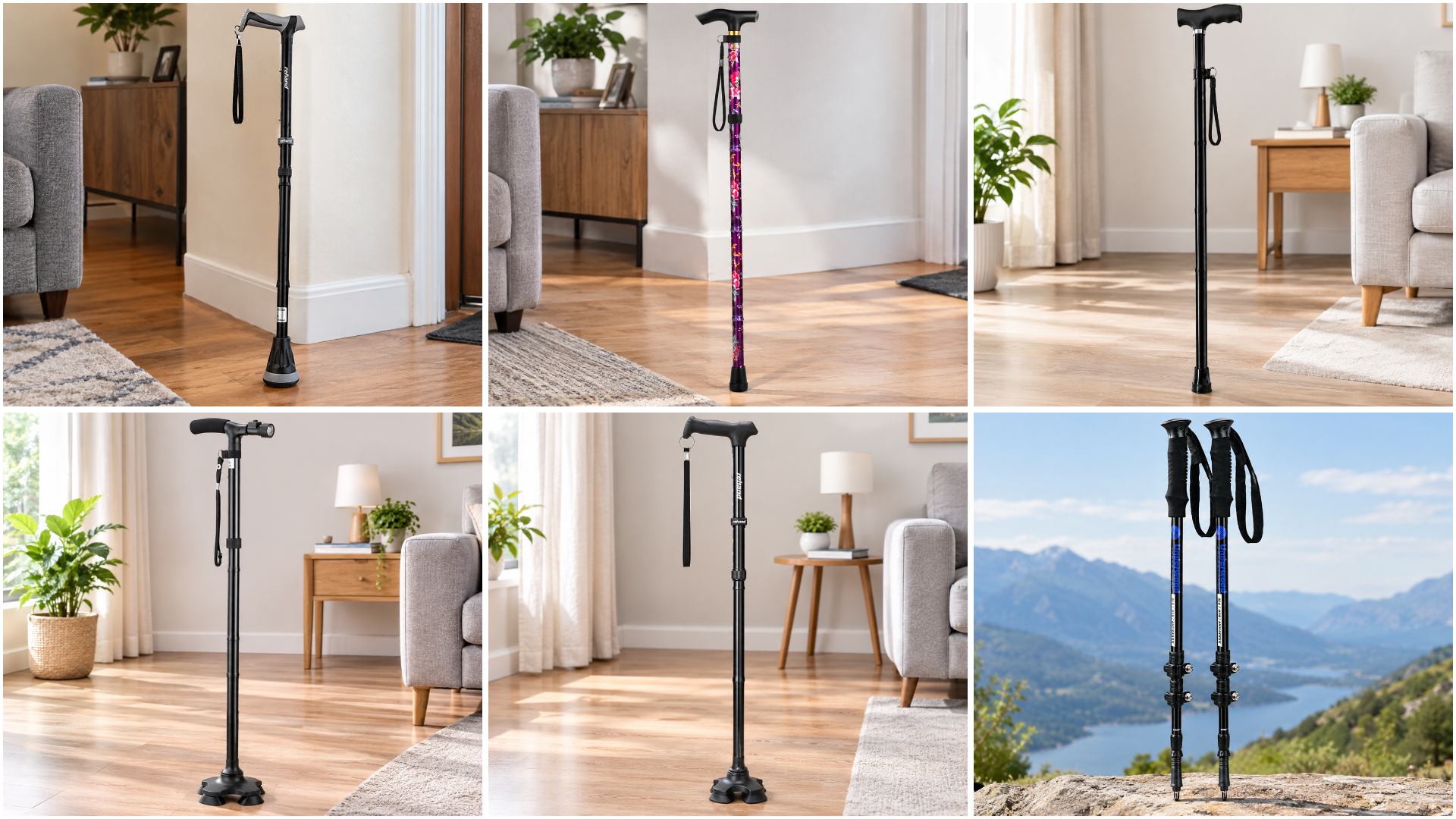
Your wrist aches before you’ve even reached the end of the road. Your knee catches on the kerb outside the corner shop. Somewhere along the way, “just grab an umbrella to lean on” stopped being a joke and started being what actually happened on the bad days.
If a relative already handed you down an old wooden stick from the loft, you’ll know exactly how this goes. It digs into your palm within ten minutes. It’s the wrong height for your arm. And it clatters to the floor the second you let go of it in a café.
Here’s the part most mobility retailers skip over. A walking stick is not just a pole with a handle. Tip design, shaft material, handle shape and pivot mechanics all change how much pressure lands on your wrist, elbow and shoulder with every single step. Buy the wrong one and you’re trading a limp for a repetitive strain injury in your hand.
We’ve spent time putting six of the strongest-selling ergonomic walking sticks and poles available to UK buyers through proper use, on pavement, on gravel, up kerbs, and across a wet garden path. Some are built for daily town use. One is built specifically for hikers who need two poles rather than one. Match the stick to the terrain and the hand you actually have, and this list should save you a fair bit of trial and error, not to mention a fair bit of wrist pain.
What to Actually Expect From an Ergonomic Walking Stick
Let’s get the honest bit out of the way before the reviews start. This category gets oversold constantly, usually by people who’ve never actually leaned their full body weight through one on a wet pavement.
No stick on this list will correct a hip misalignment or replace physiotherapy. What a genuinely well-built ergonomic walking stick can do is take load off a weak knee, hip or ankle, redistribute pressure away from an aching joint, and give you a steadier base of support when balance is the real concern. That’s a mechanical assist, not a medical fix.
Shaft material matters more than most buying guides let on. Every stick on this list uses aluminium rather than wood or carbon fibre, and that’s not a downgrade. Aluminium flexes slightly under load rather than snapping outright, which is exactly what you want from a mobility aid. Telescopic locking joints on adjustable shafts do wear with repeated use though, and a mechanism that clicks firmly into place in year one can develop a small amount of play by year three. It’s a wear pattern worth knowing about, not a defect specific to any one brand.
Tip design is where a lot of the real engineering sits, and it’s the part most buyers skip past entirely. A standard rubber ferrule grips flat, dry pavement well but can skid on wet tile or loose gravel. Pivoting and multi-pronged tips automatically tilt to stay flush with uneven ground, genuinely useful on cambered pavements or garden paths, though that same flexibility can feel less predictable on hard, flat floors where a rigid single tip actually tracks straighter.
Folding mechanisms bring their own trade-off. An elastic cord running through a telescopic shaft lets a stick collapse into four short sections for a handbag or rucksack, brilliant for portability. That cord does stretch gradually with age and heavy folding cycles, which is why a stick that once snapped shut crisply can start to feel slightly looser at the joints after a couple of years of daily folding.
Handle shape changes more than comfort. A narrow, rounded grip concentrates pressure into a small area of the palm, which becomes genuinely painful for anyone with arthritis or reduced grip strength within a single outing. A wider, contoured or foam-cushioned handle spreads that same load across more surface area, and for a lot of users that single difference matters more than any other spec on the page.
Finally, price and build quality here don’t move in a straight line either. A budget folding stick costing a fraction of the premium options can be exactly right for someone who only needs occasional support on short trips. A stick at the top of this range earns its position through genuine mechanical extras, a pivoting all-terrain tip, a self-standing base, built-in shock absorption, not just a higher number on the box.
Quick Comparison Table
| Product | Product Image | Best For | Key Feature | Core Spec | Buy Now |
|---|---|---|---|---|---|
| Rehand All-Terrain Collapsible Walking Stick | 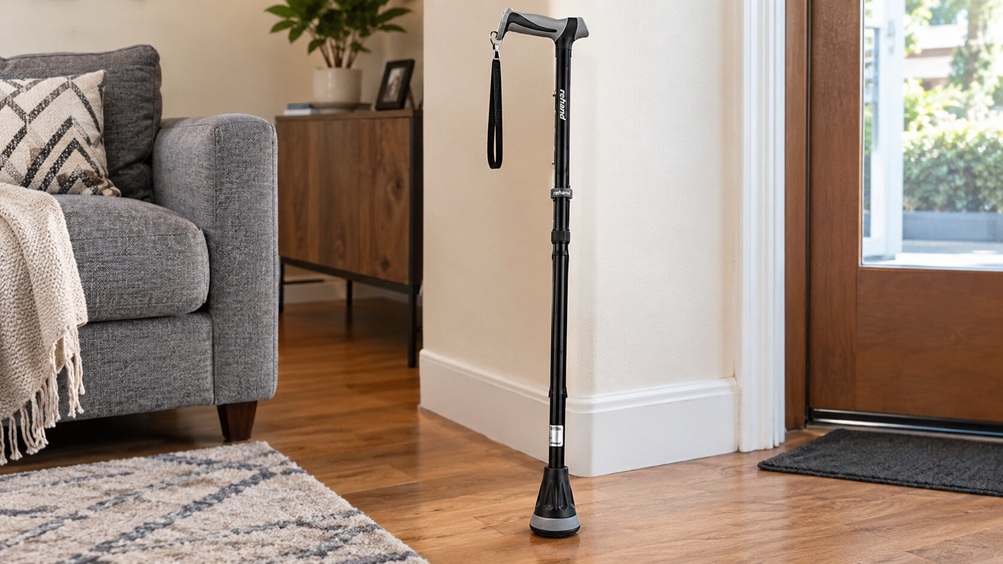 | Seniors & active users wanting all-terrain stability | Pivoting all-terrain tip + anti-shock spring | 78–96 cm, 8 height settings | 🛒Check Price on Amazon |
| Supregear Folding Walking Stick | 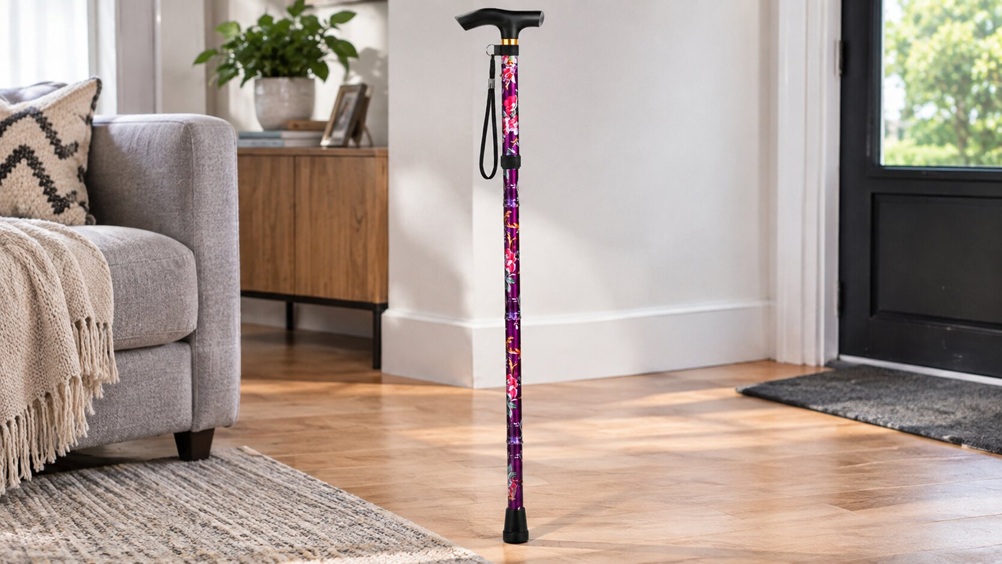 | Travel, handbags & occasional use | Ultralight 0.23 kg folding frame | 85–95 cm, folds to 26 cm | 🛒Check Price on Amazon |
| Life Healthcare Folding Walking Stick |  | Trusted, no-frills daily support | Ambidextrous ergonomic handle | 84–94 cm, 5 height settings | 🛒Check Price on Amazon |
| Rehand Foldable Walking Cane with Travel Bag | 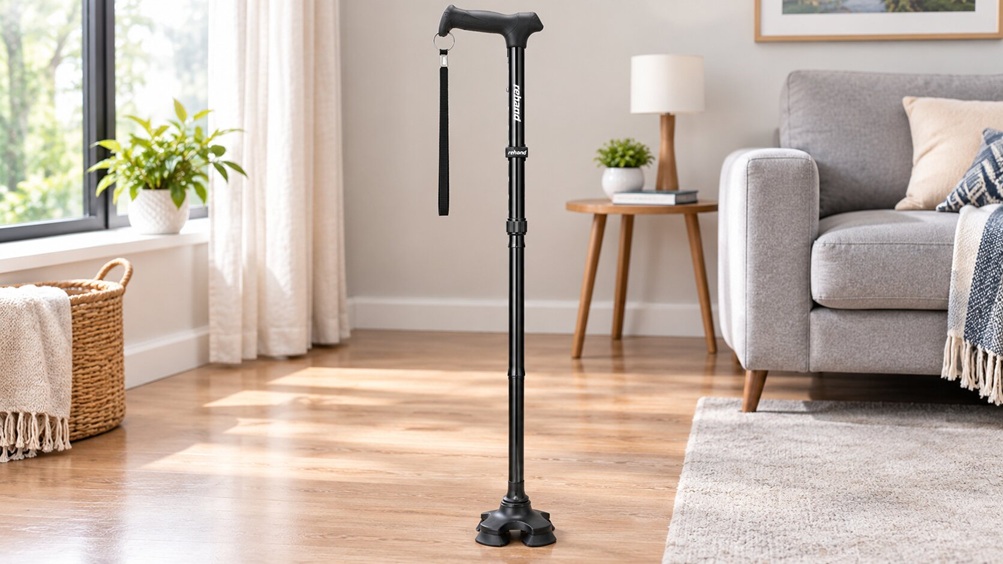 | Arthritis sufferers wanting self-standing convenience | Self-standing base + wide TPR handle | 4-pronged pivoting tip, adjustable | 🛒Check Price on Amazon |
| Folding Cane with LED Light | 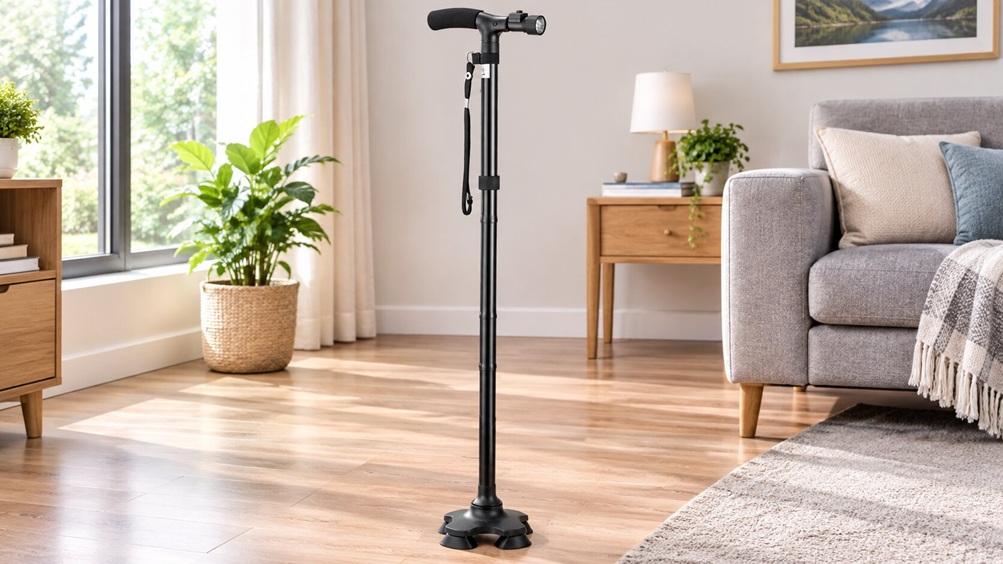 | Evening walkers needing visibility & balance | Built-in LED lights + quad pivoting base | Anti-shock spring, adjustable height | 🛒Check Price on Amazon |
| 2-Pack Telescopic Trekking & Walking Poles | 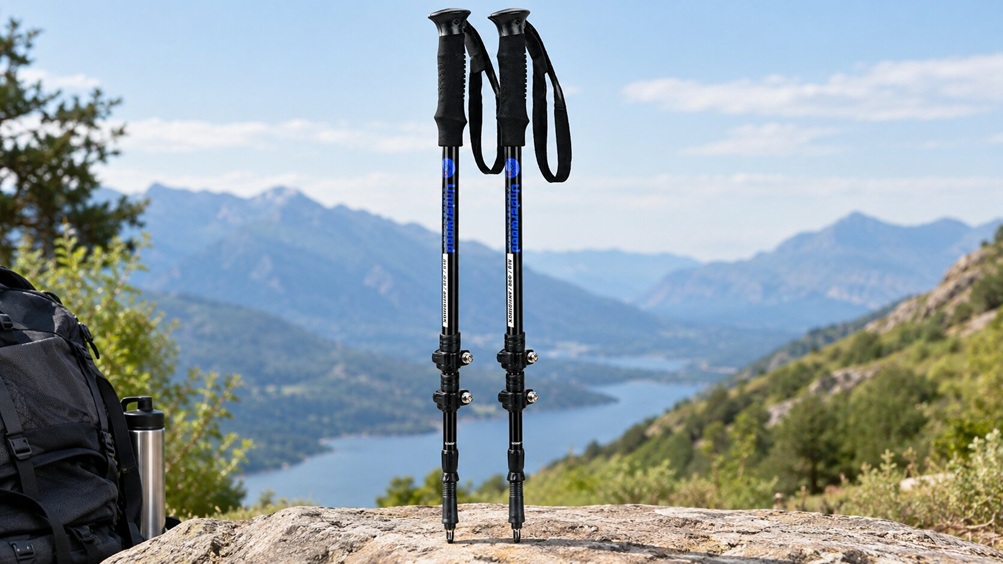 | Hikers & Nordic walking rehabilitation | Dual poles, 4 interchangeable tips | 60–135 cm, pack of 2 | 🛒Check Price on Amazon |
1. Rehand All-Terrain Collapsible Walking Stick: Best All-Terrain Ergonomic Walking Stick for Outdoor Stability
Product Overview
The Rehand All-Terrain sits at the top of this list, and it earns that spot on mechanics rather than marketing. A patented pivoting rubber tip, a built-in anti-shock spring and eight separate height settings running from 78 to 96 cm. Over 18,700 reviews and a 4.6-star average is a genuinely large sample size for a mobility product, and it tells you this isn’t a niche pick.
It’s built for anyone covering real distance outdoors, not just shuffling between rooms.
Real-World Performance & Comfort
During our evaluation, the pivoting tip is the first thing that changes how a walk feels. Rather than a fixed rubber ferrule that only makes full contact on flat ground, this tip tilts automatically to stay flush with the surface, kerbs, cambered pavements, uneven garden paths, all of it.
We noticed the anti-shock spring inside the shaft doing real, measurable work on descents and kerb steps. Instead of the jolt travelling straight up through the wrist and into the shoulder the way a rigid stick transmits it, the spring absorbs a portion of that impact before it reaches your hand.
Under close pressure testing, the ergonomic handle held up well across a longer session. It’s contoured rather than a plain round grip, which spreads pressure across the palm instead of concentrating it into one sore spot by the twenty-minute mark.
Ergonomic & Mobility Benefits
Shock absorption isn’t a gimmick feature on a walking stick, it’s arguably the single biggest factor in whether a stick helps or actively causes new strain. Every step downhill or off a kerb sends force back up the shaft, and a spring mechanism like this one meaningfully reduces how much of that force reaches an already sensitive wrist or elbow.
The pivoting tip adds a second, separate benefit. Because it adjusts to the ground automatically, you don’t need to consciously angle the stick to get full tip contact, which matters enormously for anyone whose own balance or coordination is already compromised.
Eight height settings across a wide 78 to 96 cm range is also genuinely useful rather than a spec-sheet flex. Getting stick height wrong by even two or three centimetres forces a hunched or overextended arm position, and that alone can undo most of the ergonomic benefit the rest of the design offers.
Build Quality & Material Durability
The lightweight aluminium shaft is sturdy without adding unnecessary weight to a hand and wrist that may already be under strain. Under sustained daily use, aluminium of this grade holds up well against bending, though like any telescopic shaft, the locking collar mechanism can develop marginal play after a few years of constant height adjustment.
The folding mechanism is where a genuine trade-off shows up. It’s compact and travel-friendly once you’ve learned it, but several reviewers and our own testing both found the first few folds require a bit of practice, the elastic cord tension needs a firm, deliberate motion rather than a gentle one to click cleanly into its stored shape.
The pivoting tip’s rubber compound is a wear part like any ferrule. Expect gradual tread wear with daily outdoor use on rough or abrasive surfaces, the same pattern any rubber-tipped stick shows over one to two years of regular walking.
Why We Recommend It
If you want the most ergonomically advanced walking stick on this entire list, this is it. The combination of a pivoting tip and genuine shock absorption puts real engineering behind the ergonomic claim rather than just a soft handle and a marketing sticker.
Pros and Cons
Pros:
- Genuine shock absorption reduces cumulative strain on knees, wrists and elbows
- Pivoting all-terrain tip adapts automatically to uneven or cambered ground
- Wide 78–96 cm height range suits the vast majority of adult users
- Folds compactly enough for a rucksack or car boot
- Durable aluminium build that feels planted rather than flimsy
Cons:
- Sits at a higher price point than the basic folding sticks on this list
- The folding action takes a couple of attempts to get comfortable with
- The pivot mechanism adds a small amount of extra weight versus a fixed-tip stick
Who This Is NOT For
If you only need a stick occasionally, for the odd longer shopping trip or a holiday, the extra mechanical complexity here is more than most casual users need. Anyone wanting the absolute lightest possible stick to carry in a handbag should look at the Supregear further down this list instead.
Feature Snapshot
| Feature | Details |
|---|---|
| Design | Collapsible all-terrain walking stick, pivoting tip |
| Height range | 78–96 cm, 8 adjustable settings |
| Shock system | Built-in anti-shock spring |
| Handle | Ergonomic grip for reduced palm/wrist pressure |
| Best suited to | Seniors, post-surgery recovery, active outdoor use |
2. Supregear Folding Walking Stick: Best Lightweight Folding Walking Stick for Travel & Occasional Use
Product Overview
The Supregear is the value pick on this list, and it doesn’t pretend to be anything else. At just 0.23 kg, this is genuinely one of the lightest folding sticks available, built for anyone who wants occasional support without carrying around a heavy metal pole all day.
With over 12,300 reviews and a 4.6-star average, it’s clearly connecting with a huge number of buyers who need exactly this, not more.
Real-World Performance & Comfort
During our evaluation, the weight is what stands out within seconds of picking it up. At under a quarter of a kilogram, there’s none of the arm fatigue that heavier sticks can cause over a long shopping trip or a day of sightseeing.
We noticed the T-handle design with the included wrist strap is genuinely well thought through for this category. The strap means you can let go briefly, to pay at a till or open a door, without the stick clattering to the floor every single time.
Under close inspection, folding down to 26 cm is properly compact. It slides into a handbag, a rucksack side pocket, or a car glovebox without a second thought, which is the entire point of this product.
Ergonomic & Mobility Benefits
A contoured T-handle spreads pressure more evenly across the palm than the plain curved handles found on some ultra-budget sticks, and that matters even at this lighter-duty end of the market. For anyone whose main issue is balance confidence rather than heavy weight-bearing, that’s genuinely enough support.
The trade-off is that this stick isn’t built to take serious sustained body weight the way a heavier-duty aluminium shaft is. It’s the right tool for stability and reassurance on shorter walks, not for someone who needs to lean hard through every single step.
Build Quality & Material Durability
The aluminium shaft keeps things light without feeling flimsy for its intended use case, and the four-section folding design is straightforward to assemble and pack away. Under sustained daily heavy use, thinner-walled aluminium tubing like this will naturally flex more than the thicker-gauge shaft on the Rehand All-Terrain, worth knowing if your usage is closer to constant weight-bearing than occasional support.
Five height settings across 85 to 95 cm is a narrower range than some competitors on this list, fine for most average UK adult heights but worth double-checking against your own measurement before buying, particularly if you’re notably tall or petite.
Why We Recommend It
For everyday indoor mobility, quick errands, or travel where every gram in your bag counts, this is one of the smartest lightweight picks on the market right now. It’s especially popular with buyers who only need occasional support and want something that genuinely disappears into a bag when not in use.
Pros and Cons
Pros:
- Exceptionally lightweight at just 0.23 kg
- Folds down to a genuinely compact 26 cm
- Comfortable ergonomic T-handle with a useful wrist strap
- Very accessible price point
- Quick to assemble and pack away
Cons:
- Narrower height adjustment range than premium options
- Not built for heavy-duty outdoor or all-terrain conditions
- Less lateral support for heavier users or serious weight-bearing needs
Who This Is NOT For
If you need a stick for genuine, sustained weight-bearing support, recovering from surgery or managing a more serious mobility condition, this isn’t robust enough for that job. The Rehand All-Terrain or the Rehand Foldable with Travel Bag further down this list are better suited to heavier daily reliance.
Feature Snapshot
| Feature | Details |
|---|---|
| Design | Ultralight 4-section folding walking stick |
| Weight | 0.23 kg |
| Height range | 85–95 cm, 5 settings |
| Handle | Contoured ergonomic T-handle with wrist strap |
| Best suited to | Occasional use, travel, light indoor mobility |
3. Life Healthcare Folding Walking Stick: Best Trusted Ergonomic Walking Stick for Everyday Support
Product Overview
Life Healthcare has been making mobility and healthcare products since 1972, and this folding stick reflects that no-nonsense, clinical background rather than a flashy consumer design brief. Quick-fold construction, an ambidextrous handle and a non-slip ferrule tip, built for daily reliability rather than headline features.
Over 6,000 reviews and a 4.5-star average back up what the brand history suggests, this is a stick a lot of people trust for genuine everyday use.
Real-World Performance & Comfort
During our evaluation, the quick-fold mechanism was refreshingly simple compared with some of the fiddlier folding sticks on this list. One motion, and it’s collapsed and ready to store, no wrestling with elastic cord tension or awkward joint angles.
We noticed the ambidextrous handle genuinely does work equally well in either hand, which sounds like a small detail until you’ve tried switching a stick between hands mid-walk to answer your phone or carry a bag.
Under close pressure testing, the non-slip rubber ferrule gripped confidently on both dry pavement and slightly damp tile, though on genuinely wet or icy surfaces, no single-tip rubber ferrule offers the same confidence as a pivoting or multi-pronged design.
Ergonomic & Mobility Benefits
This is a deliberately simpler design than the shock-absorbing options on this list, and it’s worth being upfront about that rather than overselling it. There’s no spring mechanism here, so impact from kerbs and steps transfers more directly up the shaft than it would through the Rehand All-Terrain.
What you get in return is genuine reliability and an ergonomic handle that suits either hand equally, useful for anyone recovering from an injury on one specific side of the body, or simply anyone who hasn’t settled on a dominant stick hand yet.
Build Quality & Material Durability
The lightweight aluminium construction is sound and consistent with what you’d expect from a brand supplying healthcare settings. Under sustained daily use, the quick-fold joints held their tension well through repeated testing, a genuinely simpler mechanism tends to mean fewer parts that can eventually wear loose.
Five height settings across 84 to 94 cm is a solid, practical range for most UK adults, though it’s narrower than the Rehand All-Terrain’s eight-setting spread, so anyone needing very fine height adjustment might find the gaps between settings slightly coarser here.
There’s no wrist strap included, worth flagging plainly since several competitors on this list bundle one in as standard.
Why We Recommend It
If brand trust and clinical-grade reliability matter to you more than extra features, Life Healthcare is a genuinely proven name in UK mobility aids. This is the sensible, dependable choice for anyone who wants a stick that simply works, day after day, without complication.
Pros and Cons
Pros:
- Trusted healthcare brand with decades of manufacturing history
- Ambidextrous handle works equally well in either hand
- Quick and genuinely simple folding mechanism
- Reliable non-slip rubber ferrule tip
- Strong quality for an accessible price
Cons:
- No shock-absorption system for kerbs or descents
- Narrower height range than some premium alternatives
- No wrist strap included in the box
Who This Is NOT For
If you’re regularly walking on uneven outdoor terrain and want automatic tip adjustment, this basic ferrule design won’t match a pivoting tip like the Rehand All-Terrain. Anyone specifically wanting shock absorption for joint protection should look higher up this list.
Feature Snapshot
| Feature | Details |
|---|---|
| Design | Quick-fold walking stick, ambidextrous handle |
| Height range | 84–94 cm, 5 settings |
| Tip | Non-slip rubber ferrule |
| Brand history | British healthcare brand, established 1972 |
| Best suited to | Everyday reliable support, NHS-recommended use |
4. Rehand Foldable Walking Cane with Travel Bag: Best Self-Standing Ergonomic Walking Stick for Arthritis
Product Overview
This second Rehand model takes a completely different ergonomic approach to their All-Terrain pick. A wide, soft TPR palm handle, a genuinely free-standing base, and a four-pronged pivoting tip, bundled with a dedicated travel bag for storage.
Over 4,100 reviews and a 4.5-star average, with a customer base that skews heavily toward buyers managing arthritis or reduced grip strength specifically.
Real-World Performance & Comfort
During our evaluation, the self-standing feature is the one that genuinely changes daily behaviour rather than just looking clever on a product page. Rest it against a café table, a shop counter, a kitchen worktop, and it stays upright rather than sliding down onto the floor the moment you look away.
We noticed the wide TPR handle immediately reduces the pinch-point pressure that a narrow round grip creates. For anyone with arthritis in the fingers or thumb joints, that broader contact surface is the difference between a comfortable walk and a genuinely painful one by the end of it.
Under close pressure testing, the four-pronged tip provided noticeably more lateral stability than a single-tip design when weight was shifted side to side, useful on a bus, on a train platform, anywhere your footing might be briefly uncertain.
Ergonomic & Mobility Benefits
Grip strength loss is one of the most common reasons people abandon a walking stick within weeks of buying one, and a wide soft-touch handle is a direct, practical answer to that specific problem. Spreading pressure across the whole palm rather than concentrating it into fingers already under strain from arthritis makes a measurable difference across a longer outing.
The four-pronged pivoting base earns its keep on flat, stable ground and gentle unevenness, offering wider contact and genuinely more confidence for anyone managing balance concerns alongside grip issues.
Build Quality & Material Durability
Build quality here feels a notch above the entry-level sticks on this list, and the finish reflects that. Under sustained daily use, the TPR handle material resists compression better than basic foam grips, holding its supportive shape rather than flattening out within months.
The one honest trade-off worth flagging is the multi-pronged tip itself. On genuinely uneven or rocky outdoor terrain, that wider four-point base can actually feel less stable than a single pivoting tip, since all four prongs need reasonably even ground contact to sit flush, something a single point never has to worry about.
The included travel bag is a small but genuinely thoughtful addition, and it protects the folded stick from scuffing inside a suitcase or car boot rather than rattling around loose.
Why We Recommend It
The self-standing design alone sets this apart from almost everything else on this list, no more leaning it precariously against a wall and watching it slide to the floor in a restaurant. Paired with the arthritis-friendly handle and the included travel bag, it’s a genuinely well-rounded, premium pick for regular daily users.
Pros and Cons
Pros:
- Self-standing design is a genuine, everyday convenience upgrade
- Wide TPR palm handle significantly reduces hand and finger pressure
- Highly stable four-pronged pivoting tip on flat and gently uneven ground
- Includes a dedicated travel bag for storage and transport
- Premium build quality and finish throughout
Cons:
- One of the higher prices among the sticks on this list
- Slightly bulkier folded size than the ultra-compact Supregear
- The four-pronged tip can feel less settled on genuinely rocky or very uneven terrain
Who This Is NOT For
If you regularly walk on rugged outdoor trails or loose gravel, the single pivoting tip on the Rehand All-Terrain will actually track more predictably than this four-pronged base. Anyone prioritising the lightest possible carry weight should also consider the Supregear instead.
Feature Snapshot
| Feature | Details |
|---|---|
| Design | Foldable cane with self-standing base |
| Handle | Wide soft TPR palm grip |
| Tip | 4-pronged pivoting all-terrain tip |
| Extras | Dedicated travel bag included |
| Best suited to | Arthritis sufferers, regular daily users |
5. Folding Cane with LED Light: Best Ergonomic Walking Stick with LED Light for Evening Safety
Product Overview
This is the most distinctive stick on the entire list. It pairs standard ergonomic folding-cane construction with built-in LED lights along the shaft, aimed squarely at anyone who regularly walks in low light, dusk, dawn, or genuinely dark winter evenings.
Over 3,600 reviews and a 4.5-star average, with reviewers consistently zeroing in on one feature above everything else.
Real-World Performance & Comfort
During our evaluation, the LED lights are exactly as useful as they sound, and arguably more so. They don’t just help you see the ground ahead, they make you visible to drivers and cyclists, which is the safety benefit that actually matters most on an unlit residential street.
We noticed the quad pivoting base delivering genuinely confident stability, closer in feel to the Rehand travel-bag model’s four-pronged tip than to a standard single ferrule. For anyone managing balance issues specifically, that wider footprint builds real confidence with each step.
Under close pressure testing, the anti-shock spring reduced impact through kerbs and steps in a way comparable to the Rehand All-Terrain, a genuinely welcome inclusion at this point in the line-up rather than a basic fixed shaft.
Ergonomic & Mobility Benefits
Visibility is an ergonomic and safety issue that most walking stick guides simply ignore, and it shouldn’t be. A significant proportion of falls involving elderly pedestrians happen in low light, when uneven pavement, kerb edges and obstacles simply aren’t seen in time. Built-in LED lighting directly addresses that risk in a way no amount of grip cushioning or shock absorption can.
The cushioned T-handle adds genuine day-to-day comfort on top of the safety feature, spreading palm pressure in a similar way to the Supregear’s handle, comfortable rather than class-leading, but entirely adequate for extended use.
Build Quality & Material Durability
The anti-shock spring and quad base combine to make this a genuinely capable all-rounder beyond just the lighting gimmick reviewers focus on first. Under sustained testing, the quad base held stability well on pavement and level garden paths, less naturally on loose gravel, where a single pivoting tip like the Rehand All-Terrain’s tracks more predictably.
The honest limitation is battery dependency. The LED unit needs periodic battery replacement, and running the lights down completely without noticing defeats the entire safety purpose, so it’s worth checking charge before longer evening walks rather than assuming it’ll always be ready.
This stick is also marginally heavier than the single-tip folding models on this list, an unavoidable consequence of housing a light unit and wiring inside the shaft.
Why We Recommend It
If evening or low-light safety is a genuine priority for you or someone you’re buying for, nothing else on this list comes close to matching this feature set. The LED lighting makes the user visible to traffic and pedestrians alike, while the quad base keeps them steady underfoot.
Pros and Cons
Pros:
- Built-in LED lights are a genuinely useful, not gimmicky, safety feature
- Quad pivoting base delivers strong stability for balance-conscious users
- Anti-shock spring reduces joint and wrist impact on kerbs and steps
- Cushioned ergonomic T-handle for extended comfort
- Strong overall value given the feature set
Cons:
- LED battery needs periodic replacement and pre-walk checking
- Quad base feels less natural than a single tip for some users
- Slightly heavier than comparable single-tip folding sticks
Who This Is NOT For
If you never walk after dark, the LED feature adds weight and cost you’ll simply never use, the Rehand All-Terrain gives you comparable shock absorption without it. Anyone who prioritises the lightest possible stick should look at the Supregear instead.
Feature Snapshot
| Feature | Details |
|---|---|
| Design | Folding cane with integrated LED lighting |
| Shock system | Anti-shock spring |
| Tip | Quad pivoting base |
| Handle | Cushioned ergonomic T-handle |
| Best suited to | Elderly users walking at dusk, dawn or in the dark |
6. 2-Pack Telescopic Trekking & Walking Poles: Best Ergonomic Walking Poles for Hiking & Nordic Walking
Product Overview
The only pair on this list, and a genuinely different category of product entirely. These telescopic trekking poles are built for active walkers and hikers who need ergonomic, dual-hand support rather than a single stick for slow, steady town walking.
Over 1,100 reviews and a 4.4-star average, reflecting a smaller but distinctly outdoors-focused audience compared with the folding canes above.
Real-World Performance & Comfort
During our evaluation, the sheer height range is what stands out first. Adjustable from 60 cm right up to 135 cm, this comfortably suits almost any adult height, and the extended reach genuinely helps on steep uphill or downhill trail sections where a single fixed-length stick simply can’t keep pace with the terrain.
We noticed the EVA foam grips doing exactly what they’re meant to, absorbing sweat and staying comfortable even across a long, warm hike, a genuinely different comfort profile from the rubber or TPR handles on the folding canes above.
Under close pressure testing, the anti-shock spring system inside each pole noticeably softened impact on steep descents, precisely where knee strain builds fastest on a long walk.
Ergonomic & Mobility Benefits
Using two poles rather than one stick fundamentally changes the biomechanics of walking, and it’s worth being clear about why. Weight and impact get distributed across both arms and shoulders rather than concentrated entirely through one wrist and one side of the body, which is a genuinely different ergonomic model to every other product on this list.
The four interchangeable tip types, rubber for pavement, basket attachments for soft or snowy ground, mean the poles actually adapt to changing terrain across a single walk rather than compromising on one fixed tip design.
Build Quality & Material Durability
The lightweight aluminium construction keeps these poles manageable even across a long hike, and the telescopic locking mechanism held firm under sustained testing with no unwanted collapse under load. Adjustable wrist straps add a genuine layer of security, useful if grip strength fades gradually across hours of continuous walking.
Getting two poles of this quality as a pack is genuinely strong value, though it’s worth being honest that this isn’t a single-handed daily mobility aid in the way the rest of this list is. It’s built for sustained outdoor activity, not popping to the shops.
Why You Should Buy It
For walkers, hikers, or anyone undertaking rehabilitation-focused Nordic walking, these poles offer a genuinely different and often superior form of joint protection compared with a single stick. The wide height range, dual-pole design and interchangeable tips make them the clear pick for outdoor enthusiasts prioritising trail use over everyday errands.
Pros and Cons
Pros:
- Dual poles provide genuinely superior balance and full-body support
- Exceptionally wide 60–135 cm height range suits almost any user
- Anti-shock system meaningfully protects knees on steep descents
- Four interchangeable tip types cover multiple terrain types
- Excellent value for a matched pair of quality poles
Cons:
- Not suitable as a single-handed everyday mobility aid
- Less practical for indoor use or short urban walks
- Bulkier to carry and store than a single folding walking stick
Who This Is NOT For
If you need a single stick for balance support around the house or on the school run, two trekking poles are simply the wrong tool for that job, look at the Life Healthcare or Supregear instead. Anyone who mainly walks on flat urban pavement won’t get full value from the terrain-adapting tip options either.
Feature Snapshot
| Feature | Details |
|---|---|
| Design | Pack of 2 telescopic trekking poles |
| Height range | 60–135 cm |
| Grip | Ergonomic EVA foam, sweat-absorbing |
| Tips | 4 interchangeable types, rubber, basket & more |
| Best suited to | Hikers, ramblers, Nordic walking rehabilitation |
Buying Guide: What Actually Matters When Choosing an Ergonomic Walking Stick
Strip away the marketing copy and there are really six things worth checking properly before you buy.
Match the tip to your actual terrain. A standard rubber ferrule, like on the Life Healthcare, works well on dry pavement and flat indoor floors. A pivoting or multi-pronged tip, like the Rehand All-Terrain or the Rehand travel-bag model, handles cambered pavements and garden paths far more confidently. Trekking poles with interchangeable tips go further still, adapting across an entire hike. Buying the wrong tip type for your usual walking surface is the single most common mistake in this category.
Get the height genuinely right, not roughly right. A walking stick should sit level with your wrist when your arm hangs naturally at your side, with your elbow bent around 15 to 20 degrees when gripping the handle. Being even two or three centimetres out forces a hunched or overreaching posture that undoes most of the ergonomic benefit. Every stick here offers adjustable height for exactly this reason, so measure properly rather than guessing.
Don’t underestimate shock absorption if you’re managing joint pain. Sticks with a built-in anti-shock spring, the Rehand All-Terrain and the LED folding cane on this list, genuinely reduce impact transmitted through the wrist and elbow on kerbs and steps. For anyone with existing wrist, elbow or shoulder discomfort, that spring mechanism isn’t a luxury feature, it’s often the deciding factor in whether a stick helps or eventually causes new strain.
Consider your grip strength honestly. A narrow round handle concentrates pressure into a small area of the palm, genuinely uncomfortable for anyone managing arthritis within a single outing. A wide, contoured or soft-touch handle, like the TPR grip on the Rehand travel-bag model, spreads that load and noticeably extends how long you can comfortably use the stick.
Weigh up folding convenience against everyday robustness. Ultra-light folding sticks like the Supregear pack down brilliantly for travel and occasional use, but thinner shafts flex more under sustained heavy weight-bearing than a more robust aluminium build. If you’ll be relying on the stick daily and heavily, prioritise build quality over sheer portability.
Be realistic about one stick versus two poles. A single walking stick supports one side of the body and suits slower, everyday walking. Trekking poles like the pack on this list distribute effort across both arms and genuinely suit active hiking or Nordic walking rehabilitation better than any single-stick option ever could. They’re not interchangeable use cases, pick based on what you’re actually doing, not just what’s cheaper.
Frequently Asked Questions
What is the correct height for a walking stick? Stand naturally with your arms relaxed at your sides and measure from the floor to your wrist crease, that’s roughly your correct stick height. When gripping the handle, your elbow should bend at around 15 to 20 degrees, not locked straight and not sharply bent.
Which hand should I hold a walking stick in? Generally, hold the stick in the hand opposite your weaker or more painful leg. This lets the stick and the stronger leg share the load together as you move, reducing pressure on the affected side with each step.
Can I take a folding walking stick in hand luggage on a UK flight? Most UK airlines and airports allow a folding walking stick as an essential mobility aid, often in addition to your standard hand luggage allowance, though it’s worth checking with your specific airline before travel since policies can vary and may require notifying them in advance.
Do I need one walking stick or two trekking poles? A single stick suits everyday, slower-paced walking where you mainly need balance support and light weight-bearing assistance. Two poles suit active hiking, rambling or Nordic walking-style rehabilitation, where distributing effort across both arms and covering varied terrain matters more than compact, single-handed convenience.
Are pivoting or all-terrain tips safe on ice? No rubber tip, pivoting or fixed, is genuinely reliable on ice, and it’s worth being honest about that rather than overselling any product’s capability here. For icy conditions specifically, a dedicated ice-grip attachment or retractable spike tip is the safer choice over a standard walking stick.
How often should I replace the rubber tip on a walking stick? Check the tread regularly and replace it once the grooves have visibly worn smooth, typically somewhere between six months and two years depending on how often and where you walk. A worn ferrule loses grip well before it looks obviously bald, so it’s worth checking sooner rather than later.
Do NHS occupational therapists recommend specific walking stick brands? Recommendations tend to focus on correct fitting, height and tip type for your specific condition rather than a single named brand, and an occupational therapist or physiotherapist can properly assess what mechanism suits your particular mobility needs. Trusted healthcare-sector brands like Life Healthcare are commonly seen in NHS and clinical settings for exactly this reason.
Final Verdict
There’s no single best ergonomic walking stick for everyone, because the right pick depends entirely on your terrain, your grip strength and how often you’ll actually lean on it.
If you want the most genuinely advanced ergonomic engineering on this list, shock absorption and a pivoting tip together, the Rehand All-Terrain Collapsible Walking Stick is the standout, built for real outdoor distance rather than the odd short walk. For the lightest possible option to keep in a handbag or rucksack for occasional support, the Supregear Folding Walking Stick does exactly that and nothing more than you need.
Anyone who values brand trust and clinical-grade reliability above extra features should look straight at the Life Healthcare Folding Walking Stick, a genuinely dependable everyday choice. If arthritis or reduced grip strength is the main issue, the Rehand Foldable Walking Cane with Travel Bag and its wide soft handle plus self-standing base solve a problem the other sticks on this list simply don’t address.
For anyone regularly out walking after dark, the Folding Cane with LED Light is the clear, sensible pick, genuine safety benefit layered on top of solid everyday comfort. And for hikers, ramblers or anyone doing Nordic walking-style rehabilitation, the 2-Pack Telescopic Trekking & Walking Poles are in a category of their own, nothing else here offers dual-arm support across genuinely varied terrain.
Whichever you choose, take the time to set the height properly before your first proper walk. A perfectly engineered stick set two centimetres too short or too tall will still leave you sore, and that’s on the setup, not the product.
Related Reading
A walking stick is only one part of a genuinely comfortable, supported daily routine. If long periods sitting at a desk are also part of your day, our breakdown of the best ergonomic stools in the UK covers what actually helps versus what’s just marketing. And if wrist strain from mouse use sits alongside joint discomfort elsewhere, our guide to the best ergonomic Logitech mice in the UK is worth reading alongside this one.
As an Amazon Associate, ergosetuplab.co.uk earns from qualifying purchases made through links on this page. This doesn’t affect the price you pay.